
December 15, 2023

What To Do After Buying a Domain Name

written by

Joe Uddeme

What To Do After Buying a Domain Name

Congratulations! You bought a domain name. But now what? In this post, domain name expert Joe Uddeme explains what to do next to keep your domain name protected – and extract its full value.


“I have a domain name. Now what?” – this is a very common question people ask.

The fact is, a domain name is pointless if you don’t do anything with it! After buying a domain, many things will run through your mind, and choosing how to use it productively can be confusing. However, don’t fret. This article will guide you on what to do after purchasing a domain name.

Do it right, and you can leverage your domain name and build it into an attractive asset. Do it wrong, and you’ll waste 20 bucks on the temporary ownership of something you can’t even touch.


Key takeaways:

  • What is web hosting and why do you need it?
  • Building a website and a brand you can leverage
  • Attracting online customers to your new business
  • Planning your exit strategy

Before we proceed, let’s run through how to buy a domain in the first place.


Acquiring Your Domain

Buying a domain has become more simple than ever. In 2025, it’s just a few clicks and a swift online transaction. The first step is to choose a domain name you like that is relevant to your business. Afterwards, you can check if it’s available to buy immediately.

Find a domain registrar accredited by the Internet Corporation for Assigned Names and Numbers (ICANN), the organization overseeing all domain names on the Internet. If the domain name is available, you can purchase it immediately from an accredited registrar. The price depends on how high the demand for the domain name is.

If the domain name has already been claimed, you need a different approach. You can check domain marketplaces to see if the owner has possibly listed the domain for sale (see our list of the best domain marketplaces). Otherwise, you can possibly contact the owner to negotiate a deal.

If this is out of your comfort zone and you have a high-value premium domain name in your sights, check out an experienced domain name broker with a great track record.

For more details on securing a domain name, check our in-depth article about how to buy a domain name.

What To Do After Buying A Domain Name

You have acquired a domain name and have taken the first step in building your web presence. There are many other things to do after buying the domain, and we’ll outline them below.

1. Get Web Hosting Setup

After buying a domain name, the first thing to consider is hosting a website with it. You’ll need a web hosting package from a reliable company. The company will host your website on its servers for a fee, and your website will be accessible once someone types your domain name into their web browser.

Web hosting has become a walk in the park, at least in terms of getting started. You can get reliable web hosting for a few dollars monthly, and the price keeps going down as computing capacity increases around the globe.

Sometimes, a domain registrar also offers web hosting services, meaning you can buy a domain name and a hosting package from the same platform. Otherwise, you can buy them separately and point your domain name to your hosting company’s servers.

2. Connect Your Domain to Your Hosting

Connecting your domain to your hosting provider is relatively easy. You can do it via two methods:

  • Changing the nameservers to those of your web hosting provider.
  • Adding a DNS A record.

Either method involves changing the domain name system (DNS) configurations from your domain registrar. Your registrar allows you to directly change the nameservers from its default to the one provided by your hosting company. You can also point your domain to the hosting company’s nameservers by adding a DNS A record. It’s the same action but with two different approaches.

3. Create an Email Address with Your New Domain

Instead of using a common email address ending with “Gmail.com,” “Yahoo.com,” or “AOL.com,” you can use one ending with your custom domain name. It makes you look more professional and shows people you’re serious about your business.

Many domain registrars also offer email hosting, so you can pay for it and create custom emails directly. Otherwise, you can choose an external email provider and change your domain’s DNS MX records to point to its mail servers.

4. Build Your Website and Brand

The best way to put a domain to work is to create a website with it. It can be any type of website, such as a blog or online store. Creating a website is usually complex, but there are ready-made tools that make the process as easy as it can get. You can use a designated website builder like WordPress, Wix, Weebly, Squarespace, etc.

WordPress is the most common tool for building websites because of its versatility. You can use it to create virtually any type of website you want. Follow these steps:

  • Install WordPress on your web hosting account (many hosting providers offer one-click WordPress installation). Afterwards, log into your WordPress dashboard to begin customizing your website.
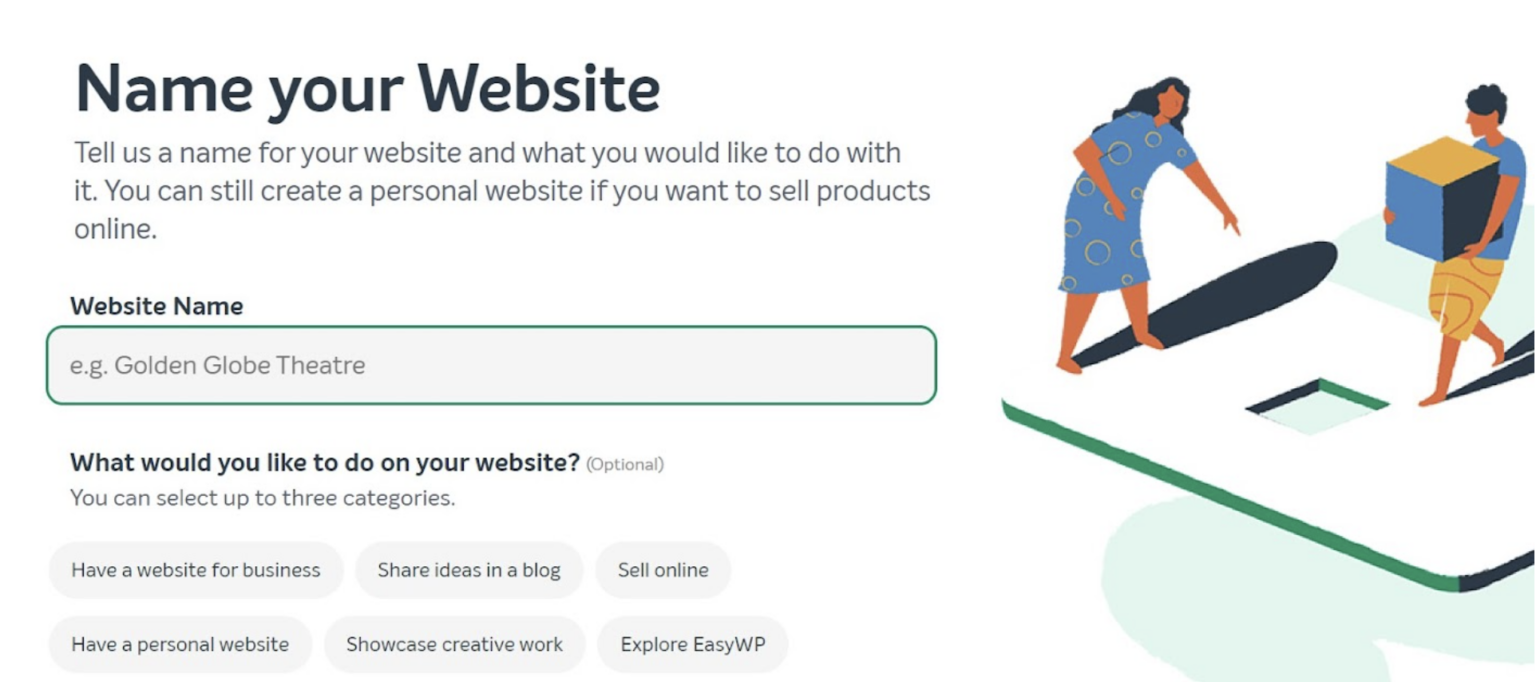
Installing a new website via EasyWP, a WordPress hosting solution from Namecheap.
  • Choose a theme for your website. The theme is critical because it dictates the look and feel of your website. Just like a great brand name, colors and fonts will play a part in the ‘feel’ of your business. Every WordPress version has a default theme, but you can change it to anyone that suits you best. You can choose a free theme from the WordPress theme directory or buy a custom theme from marketplaces like ThemeForest. You’ll install the theme directly from your dashboard or manually upload the theme file.
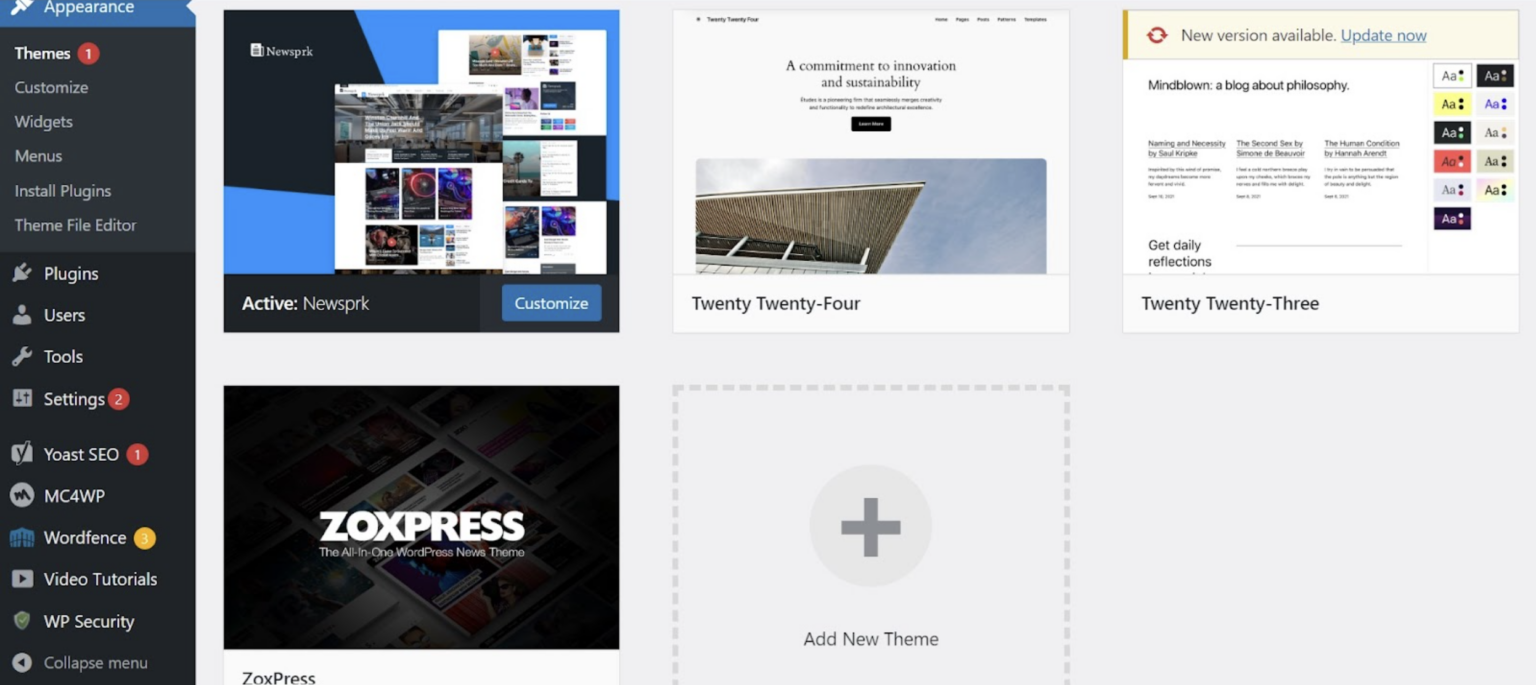
WordPress theme library
  • WP plugins. Install WordPress plugins to add features to your website. The best part of WordPress is its ecosystem of plugins built by external developers. You can find any plugin you think of to add custom features to your site. Examples of popular plugins include WooCommerce for selling products, WPForms for creating forms, Akismet for anti-spam protection, etc.
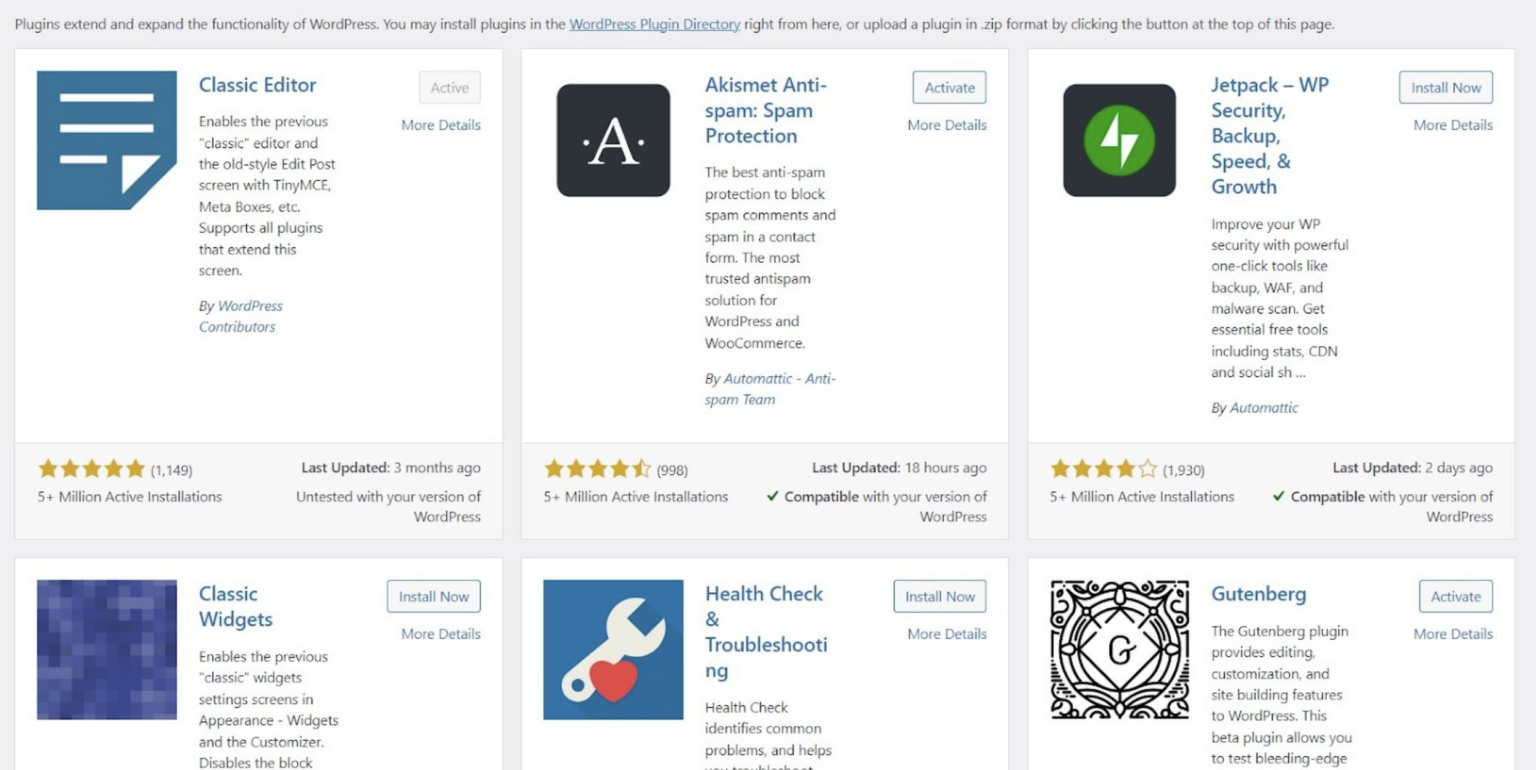
WordPress plugins screengrab

If WordPress is unsuitable for you, you’re free to choose any other website builder to create your site. Some people prefer ‘drag-and-drop’ visual editors, like Wix, for example.

5. Register and Trademark Your Name

If your domain name is part of a new business or startup, it’s advisable to register the business with the relevant government agency and file a trademark for your domain name. Formal registration makes your business look more legitimate to customers and fellow businesses.

You can register your business under various legal structures, including a sole proprietorship, partnership, or limited liability protection (LLC). An LLC means the business has a separate legal identity, and the shareholders (including you) won’t be personally responsible for corporate debts and judgments, i.e., limited liability.

You can file for a trademark with your relevant government agency, e.g., the Patent and Trademark Office (PTO) for U.S. residents. A trademark gives you legal protection against another business using your name. Domain consulting services may be able to help you here.

6. Market Your Website

It’s not enough to just create a website. You must promote your website to ensure your relevant target audience finds and interacts with it. The best ways to promote your website include:

Submit Your Website To Search Engines

You want your website to be indexed by popular search engines like Google, and by submitting your website through a tool called Google Search Console you can get it indexed effectively.

Backlinks

Find a way for other websites to link back to your website. These ‘backlinks’ improve your site’s reputation with search engines, and they’ll suggest your website more when people search for relevant queries.

You can write informative content that other websites will gladly link back to. You can also exchange backlinks with relevant websites to boost your rankings. Note – this is a long-game strategy that can take months or years to pay off!

Social Media

Promote your website on popular social media platforms like Facebook, X (Twitter), Reddit, Quora, and others. It’ll help you spread the word about your brand and get customers.

7. Create A Google Search Console (GSC) Account

Google is the world’s most popular search engine, with an 83% market share. It’s practically the gateway to the web, and you’ll be doing your website a disservice if Google does not index it.

Google Search Console (GSC) is a platform that allows website owners to check their indexing status, detect errors, and optimize their visibility on the Google search engine. Anyone can create a GSC account and add their website to it.

You must verify ownership of any domain you want to add to GSC, and it works in different ways, including

  • Uploading a specific HTML file to your domain’s root directory.
  • Adding a custom HTML tag to your website.
  • Adding a TXT record to your domain’s DNS configuration.

After verifying ownership, generate an XML sitemap of your website and submit it to Google Search Console. This sitemap defines the relationship between all your website’s menus and pages, helping Google index it effectively.

A Google Search Console account allows you to monitor which website pages have been indexed by Google and which have not. You can detect and fix indexing issues to improve your visibility and search engine rankings. Google also provides a tool to evaluate and enhance your website’s speed and performance, which plays a significant role in its search engine rankings.

8. Sell Your Domain

After putting a lot of effort into building and maintaining a website on your domain name, it’s understandable to want to sell the domain and enjoy the fruits of your labor. The good news is that domain names become more valuable when you use them to create websites and follow the other steps mentioned in this article; here are some tips on buying and selling domain names for profit.

The easiest way to sell a domain is to list it on a marketplace to see if you’ll find willing buyers. However, the best option is to hire a domain name broker like Name Experts to help you. Domain brokers are experienced in judging the value of a domain and negotiating the best deal for you. On your own, you may significantly undervalue your domain and sell it for less than it’s worth or overvalue it and find no buyers.

A domain broker helps you strike the right balance and sell your domain for an optimal price.

Computer keyboard with a green shopping cart button to denote selling a business with an attractive domain name


About the author

Joe Uddeme is Director and Principal of Name Experts, one of the world’s leading domain name brokerage services. He has overseen domain name sales and acquisitions totaling more than $150 million and is renowned worldwide as a go-to expert in buying and selling premium domains. Need help? Contact us at: [email protected]

Subscribe for More Domain Buying & Selling Advice

Related posts

A man's shadow to indicate anonymity when trading domain names.
How to Buy a Domain Anonymously

Last updated: 15 October, 2025. Want to buy a domain name anonymously? You’re not alone – when the stakes are high, business buyers often want to stay out of the limelight. NameExperts.com Director Joe Uddeme explains how it’s done. What is Anonymous Domain Registration? Anonymous domain registration is a service that allows individuals and businesses to register a domain name without revealing their personal details in the public WHOIS database. Instead of displaying the domain owner’s personal information, such as name, address, and contact details, the registration uses generic proxy details. This approach provides an additional layer of domain buying privacy and security, ensuring that your personal information remains confidential. Understandably, it can be a very attractive option when trying to buy a premium domain name. Adding domain privacy can anonymize ownership details in the WHOIS database – which helps keep your name out of the picture. Anonymous domain registration is particularly valuable for protecting personal information, preventing unwanted solicitations, and maintaining confidentiality in sensitive situations. Key takeaways: Anonymous registration comes with many benefits Understand the role of WHOIS and regulatory issues Get top tips to boost security and domain name anonymity Work with an experienced domain broker to simplify the process and ensure you stay anonymous   Benefits of Private Domain Registration Registering a domain name anonymously offers numerous benefits, including: Protection of personal Information: Anonymous domain registration keeps your personal details, such as name, address, phone number, and email ID, private. This prevents your information from being publicly accessible in the WHOIS database. Domain privacy protection services can further obscure your personal information during registration. Prevention of spam and unwanted solicitations: By withholding ownership information, anonymous domain purchase helps you avoid unsolicited communication and spam. In business, information can be leveraged in numerous ways. Owning a domain name anonymously can be hugely advantageous. Enhanced security: Registering a domain anonymously adds an extra layer of security against cyber crimes like ransomware attacks and domain hijacking. You’ll boost both security and privacy by ensuring your contact information is protected. Confidentiality: Securing a domain name anonymously allows you to maintain secrecy in sensitive situations, such as buying premium domains – or selling them – and means you don’t have to reveal your identity. Emotional pricing elimination: Anonymous transactions eliminate emotional pricing by the seller based on the buyer’s identity and intention. If they know who you are, they may hike up the price, obscuring the true valuation. Discreet domain procurement: Companies can discreetly procure domains for internal products, brand expansions, or mergers without tipping off competitors. Understanding the WHOIS Database What is the WHOIS Database? The WHOIS database is a publicly accessible repository that stores information about registered domain names. Managed by the Internet Corporation for Assigned Names and Numbers (ICANN), this database contains essential details about domain owners, including their name, address, phone number, and email address. The primary purpose of the WHOIS database is to provide transparency and accountability in the domain name registration process. It allows users to look up information about a domain name and its owner, ensuring that the domain registration landscape remains open and trustworthy. Risks of Public WHOIS Data While the WHOIS database serves an important role, having personal details publicly available can pose several risks for domain owners: Spam and unsolicited contacts: With personal information readily accessible, domain owners may find themselves inundated with unwanted emails, phone calls, or physical mail from marketers and spammers. Identity theft: Cybercriminals can exploit the information in the public database to steal or hijack a domain, leading to potential financial and reputational damage. Privacy breaches: Publicly available personal information can be used to compromise a domain owner’s privacy and security, making them vulnerable to various forms of cyber threats. Once you realize the risks associated with publicly listing any domain names you acquire, you’ll likely want to protect your personal details through anonymous domain registration and other privacy measures. A skilled domain broker can help with all this. They will work on your behalf and protect you from risk. Check out our guide to domain name negotiations to find out how else domain brokers can help. Why Choose Anonymous Domain Registration? By choosing anonymous domain registration, you ensure your personal information is not publicly accessible in the WHOIS database. It’s basically like putting up a wall around your ownership that no one can peek over. It’s not difficult to register anonymously (your domain name broker can take care of this as part of their service), and by keeping your personal information private, you can sleep soundly at night. How to Register a Domain Anonymously There are several ways to ensure anonymous domain purchase, including: Using a domain registrar that offers anonymous registration: Services like Namecheap or Google Domains provide options that help conceal buyer identity when registering a domain name. Utilizing a proxy service: Services like Domains by Proxy or Uniregistry enable you to mask registration information, ensuring it remains private. Registering through a third-party service: Using a VPN or a domain anonymization service can help you register a domain without revealing your identity. Using a domain broker or marketplace: Engaging a domain broker or using a domain name marketplace can help conceal your identity. Using a domain privacy service: A domain privacy service can protect your personal information by replacing it with the service’s contact details. Talk to your broker about this. Some registrars offer free domain with hosting packages, which can lower overall costs and enhance the appeal of their services. Verifying Domain Privacy Protection You can easily explore the WHOIS database by entering your domain name in the search bar. This lets you see whether a website you own currently has domain privacy protection or not. What you want to find is a generic name, contact address, or email address that forwards messages to you. If you see any of your details in the Domain Information panel, consider enabling WHOIS privacy. You can also check with your domain registrar to see if they offer domain privacy protection services. Why Choose Anonymous Domain Name Registration? As mentioned, it adds a layer of security and protection for domain owners. By keeping personal information private, individuals and businesses can: Protect against cyber threats and unwanted exposure Prevent domain hijacking and fraud Maintain confidentiality in sensitive situations Enhance security against ransomware attacks and other cyber crimes Ensure personal information remains hidden from public view on WHOIS Pro tip: while anonymous domain registration has many benefits, always choose a reputable domain registrar that provides reliable privacy protection services. Additionally, be aware of the potential limitations and considerations when registering a domain name anonymously, such as specific restrictions or policies against this for certain domain extensions (TLDs). Simple Steps for Maintaining Domain Name Anonymity You don’t need to be a tech wizard to keep your name out of the picture. Here are five things to try: Use a VPN to mask your IP address and location. Use a secure email service that offers end-to-end encryption. Be cautious when sharing personal information online. Use a domain broker or a domain name marketplace to purchase a domain name anonymously (brokers such as NameExperts.com can help you make an anonymous offer to a domain owner, too). Consider using a proxy service to mask your personal information. If using escrow services to pay (recommended), make sure your broker knows how to handle this in a manner that keeps your identity secret from the seller. By following these tips, you can ensure that your personal details remain confidential and your online presence is secure. If you need help, your broker can streamline the process. Regulatory Considerations Compliance with ICANN Regulations ICANN regulations mandate that domain registrars collect and store accurate contact information for domain owners. This requirement ensures that the domain registration process remains transparent and accountable. However, ICANN also recognizes the need for privacy and allows for anonymous domain registration through the use of proxy services or private domain registration. To comply with ICANN regulations, domain registrars must: Collect and store accurate contact information: Registrars are required to gather and maintain up-to-date contact details for all domain owners. Provide options for anonymous domain registration: Registrars should offer services such as proxy registration or private domain registration to help domain owners protect their personal information. Educate domain owners on risks: It is crucial for registrars to inform domain owners about the potential risks associated with public WHOIS data and the benefits of opting for anonymous registration. Offer tools and services for privacy protection: Registrars should provide tools and services that enable domain owners to safeguard their personal information and maintain privacy. By adhering to these guidelines, domain registrars can ensure compliance with ICANN regulations while offering robust privacy protection options for domain owners. This balance between transparency and privacy helps maintain trust and security in the domain registration ecosystem. General Data Protection Regulation (GDPR) Implications General Data Protection Regulation (GDPR) has significant implications for domain registration and WHOIS data. Under GDPR, personal data cannot be shown without consent. This means that domain registrars must obtain explicit consent from domain owners before publishing their personal data in the WHOIS database. If you’re a domain owner, you can request that your personal information be removed from the WHOIS database by contacting your domain registrar. This regulation helps protect your personal information and ensures privacy. Limitations and Considerations when Seeking Domain Anonymity While anonymous domain registration offers many benefits, there are some limitations and considerations to keep in mind: Some domain extensions (TLDs), such as country-code top-level domains (ccTLDs), may have specific restrictions or policies regarding anonymous registration. Ensure that the domain registrar you choose has a reliable privacy protection service and a good reputation in the industry. Some domain registrars may require identification verification, but not all do. Domain privacy protection services may not be available for all domain registrars, so it’s essential to check with your registrar before purchasing a domain name. While private domain acquisition is possible in many cases, exceptions exist. An experienced domain broker can walk you through all available options.   About the author Joe Uddeme is Director and Principal of Name Experts, one of the world’s leading domain name brokerage services. He has overseen domain name sales and acquisitions totaling more than $150 million and is renowned worldwide as a go-to expert in buying and selling premium domains – and keeping clients’ names confidential whenever privacy is required. Contact us at: [email protected]

Two geometric storefront shapes side by side comparing .store and .com domain extensions with glowing blue-purple gradients on dark background
Choosing Between .store and .com Domain Extensions
US dollar blended into Chinese yuan
Domain investors in China should buy Western Premium domains

Memo to Chinese domain name investors: NameExperts.com Director Joe Uddeme thinks you’re missing a trick if you limit your portfolio to local names.   Most Chinese investors tend to shy away from Western-type domain names as they don’t have meaning in mainland China – names that contain vowels and the letter “v” in particular. Are they limiting their long-term growth potential? Some would say sticking with Chinese domains is a safer investment. As seasoned domain name brokers, however, we disagree. Here’s why… Key Takeaways New TLDs are not a good long-term play Aftermarket prices for .com names remain high Work with a broker if you need help with domain portfolio management   Background – understanding the Chinese domain name marketplace For those of you that follow the domain investor market, specifically in China, you can see all types of newly minted investors looking for the next great domain name investment. Most Chinese investors are focused on the domain names that have relevance inside of mainland China. The most popular investments in China are the short acronym domain, or simple numeric domain names as they translate to meaning to the Chinese culture. Some examples include the following (N = number; L = letter): 15.com (NN.com) 123.com (NNN.com) TR.com (LL.com) TYPL.com (LLLL.com) 6N.com (LN.com) N6.com (NL.com   Chinese domain investment trends As domain investments continue to increase in China, we are seeing many investors branching out into some of the newer GTLD extensions as alternative investments including; .club, .top, .wang. They are acquiring these names for much lower costs than the typical .com investment. Is that a solid investment? We say: no. The Chinese investor is savvy, but they are limiting their investment opportunity. In most instances, domain investors in China are only focused on these types of names because they create liquidity and are very attractive to the Chinese on a quick-flip model (check out our guide to domain name investing). Additionally, the Chinese investor should look at the plethora of available .com domain name inventory on the aftermarket. Tons of fantastic domain inventory is readily available. Short, generic and easy to spell English words that are solid investments. The saturation of the internet continues to precipitously grow year-over-year, with 78% of the Chinese population now online. When you do the math, it’s easy to see the longer-term opportunity. Should you limit yourself as an investor? Not with the .com market  stronger than ever – with fantastic acquisition opportunities and names that ultimately have a global appeal and market reach. We believe domain investors in China will start to acquire short, generic .com domains as trillions of dollars are available for private Chinese investors. Way back in 2017, George Kirikos had a fantastic post on Twitter, referencing 12,000 startups being created every day in China. The domain investor continues to evolve and grow. Investors should look at the longer-term investment opportunity and acquire names that are globally acceptable and not limited to mainland China.   How a domain broker can help Friends in the right places are always good to have, and most international domain brokers would gladly help Chinese companies and individuals who want to buy domain names. Domain brokers help buyers of any nationality to understand current market trends and navigate the sometimes complex world of domain acquisitions. NameExperts.com is one of the world’s best-known brokerages, offering personalized boutique services that include domain name strategy, portfolio management, negotiation and stealth acquisitions.   About the author Joe Uddeme is Director and Principal of Name Experts, one of the world’s leading domain name brokerage services. He has overseen domain name sales and acquisitions totaling more than $150 million and is renowned worldwide as a go-to expert in buying and selling premium domains. He advises clients globally. Contact us at: [email protected]

Why Work with Name Experts

Name Experts offers personalized domain brokerage services, assisting clients in buying or selling premium domain names with expert appraisal, negotiation, and complete transaction management while ensuring confidentiality.

Some of our most
successful stealth acquisition and sales

Aid.com

Fit.com

Mine.com

GLD.com

Jeff.com

Fora.com

Nori.com

Secure.com

Guitar.com

F*ck.com

Radian.com

MetaData.com

Prize.com

Link.com

Loop.com

Programs.com

Claim.com

Quince.com

Hook.com

QXO.com

NQ.com

Rest.com

Humani.com

Max.com

Need help buying or selling premium domains?