Domain name availability (or lack of it) is what keeps domain buyers up at night. In this guide, domain name expert Joe Uddeme explains exactly what it means when a domain appears unavailable – and what to do about it.
Choosing the perfect domain name for your business is like finding the ideal storefront location in Manhattan – everyone wants prime real estate, but most of the best spots are already taken.
Securing an available domain name that matches your brand vision has become increasingly challenging, with an estimated 100,000 domains registered daily. But here’s the good news: just because your dream domain appears unavailable doesn’t mean it’s out of reach forever.
Understanding domain name availability goes far beyond simply typing your desired name into a registrar’s search box. It involves mastering the ins and outs of the domain ecosystem, from DNS mechanics to aftermarket negotiations. You also need to know exactly what to do when that dreaded “domain not available” message appears.
Whether you’re starting a business, rebranding an established firm, or expanding into new markets, you’ll need a comprehensive strategy for domain acquisition. It can make the difference between settling for www.yourcompanynameLLC2025.com (no thanks!) or securing the memorable, brandable domain you really need – something that will define your online presence for years to come.
This guide will explore professional strategies that Fortune 500 companies use, reveal the hidden opportunities in expired domains, and show you why sometimes the best approach involves working with experts who know how to unlock doors that appear permanently closed.
Strategic options include direct owner contact, broker negotiations, alternative extensions, and monitoring for expiration.
Explore domain aftermarket opportunities through auctions, expired domains, and private sales.
Professional domain brokers are well equipped to access off-market domain names and negotiate acquisitions that individual buyers may struggle to do alone.
Understanding domain registration mechanics, renewal cycles, and legal considerations goes hand in hand with making informed decisions – and avoiding costly mistakes.
Understanding Domain Name Availability: The Foundation
Domain name availability isn’t as straightforward as it might seem. When you search for a domain, you’re not just checking if someone owns it – you’re investigating its entire status within the global Domain Name System (DNS).
The DNS functions as the internet’s phonebook, translating human-readable domain names into the numerical IP addresses that computers use to locate websites.
Every registered domain exists in one of several states:
Active and in use
Registered but parked
Expired but still in grace period
Or truly available for registration
The complexity arises because domains don’t simply switch from “taken” to “available” overnight. Instead, they progress through multiple phases, including grace periods, redemption periods, and auction phases that can last several months.
The Domain Registration Ecosystem
There are four key players here: registrants (domain owners), registrars (companies like GoDaddy that sell domains), registries (organizations that maintain TLD databases), and ICANN (the nonprofit that oversees the entire system).
This hierarchical structure means that when you check domain availability, you’re querying databases maintained by multiple organizations across the globe.
Domain names are essentially leased, not purchased outright. Most registrations run for one to ten years, and failure to renew results in the domain entering various expiration phases before potentially becoming available again.
Understanding this lease-based system is crucial because it reveals opportunities that aren’t immediately obvious when a domain appears “taken.”
How to Check If a Domain Name Is Available
The most basic availability check involves typing your desired domain into any registrar’s search tool. However, experienced domain hunters use multiple verification methods to get the complete picture.
Primary Methods to Check Domain Owner
Registrar Search Tools provide instant availability status for standard domains. Popular platforms include GoDaddy, Namecheap, and Name.com, each offering slightly different interfaces and suggestion algorithms.
These tools excel at finding available variations and alternative extensions when your first choice is taken.
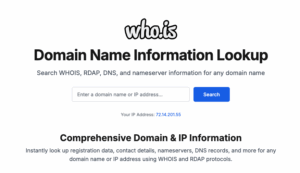
WHOIS Database Queries reveal the complete registration history of any domain. This publicly accessible database shows current ownership details, registration dates, expiration dates, and registrar information.
Even when privacy protection hides owner contact details, WHOIS data offers some important insights into a domain’s status and history.
Specialized Domain Tools like DNSChecker.org and InstantDomainSearch.com are super-useful, and offer faster, more comprehensive searching capabilities. They can simultaneously check availability across hundreds of extensions and provide real-time results as you type.
Advanced Availability Research
Serious domain seekers go beyond the obvious and delve into domain history, using tools like the Wayback Machine. This reveals how a domain was previously used, which can affect its value and potential SEO benefits.
Traffic analysis tools help determine if an available domain receives direct navigation visits, indicating inherent value.
Trademark searches are essential before pursuing any domain, as registration doesn’t protect against legal challenges from trademark holders. Professional domain investors routinely conduct comprehensive due diligence that includes trademark clearance, especially for premium domains.
The thing to remember is this: discovering that your ideal domain is already registered (which happens a lot) doesn’t end your quest – it simply puts you on a new path. The key is understanding that “taken” isn’t necessarily a dead-end. Domains exist in various states of availability, each requiring different strategies.
Immediate Assessment Steps
Visit the actual website first. Many registered domains aren’t actively used – so you’ll see display only parking pages, error messages, or outdated content. If the domain shows a generic parking page or advertisement, the owner might be more willing to sell than someone operating an active business.
Conduct WHOIS research to identify the current owner and registration history. Look for clues about ownership motivation: domains registered by individuals for personal projects often have different sale potential than those held by corporations or professional domain investors.
Example: a model aircraft enthusiast may have snapped up something like superfly.com many years ago and be willing to sell it for a relatively reasonable amount to an airline travel company.
Evaluate the Domain’s Usage Intensity
A domain powering a major e-commerce site will be nearly impossible to acquire, while one redirecting to a different URL or showing minimal development might be available for the right offer.
Direct Owner Contact Strategy
Reaching out to domain owners requires diplomatic finesse. Seriously – we’ve seen so many failures that would-be buyers blew at the first step because of clumsy outreach.
Craft professional communications that express genuine interest without revealing desperate urgency. Successful domain acquisition emails typically include a brief business introduction, specific interest in the domain name, and an invitation to discuss potential sale terms.
Avoid jumping in with a specific price, because this can leave you with little or even zero bargaining power. Instead, focus on opening a clear line of communication and gauging the owner’s interest in selling.
No matter how great you think the name that you are after is, many domain owners have never considered selling until approached by a serious buyer.
Working with a Professional Broker
If direct contact fails or when dealing with high-value domains that you don’t want to mess up, professional domain brokers are your secret weapon.
Experienced brokers (such as NameExperts.com) maintain networks of domain owners and understand market pricing dynamics far better than most private buyers.
Brokers also offer crucial anonymity during negotiations, which helps prevent sellers from inflating prices – when they identify the buyer as a major corporation, for example. They also handle complex legal and financial aspects of domain transfers, reducing risks for both parties.
Perhaps their greatest skill, however, is negotiation. A good broker with years of experience knows exactly how to play their cards and always has your best interests at heart. This skill is hard to overstate and has saved buyers many millions of dollars over the decades.
Exploring Alternative Solutions and Extensions
When your exact domain remains unattainable, strategic alternatives can provide effective solutions. The key is maintaining brand consistency while exploring options that might even offer advantages over your original choice.
For example, perplexity.ai intentionally chose .ai to align with their industry, and the extension actually adds branding power.
Extension Alternatives
The domain extension landscape has expanded dramatically beyond traditional .com, .net, and .org options. Modern alternatives like .io, .ai (as mentioned above), .co, and industry-specific extensions like .tech provide brandable alternatives that can actually enhance rather than compromise your brand identity.
Country Code TLDs offer interesting opportunities, particularly for global brands. These alternatives often provide better availability while maintaining professional credibility.
New Generic TLDs include hundreds of options from .app to .xyz, many of which align perfectly with specific business types. A fitness company might find .fitness more brandable than a complex .com variation, while a consulting firm could leverage .consulting for immediate brand clarity.
Creative Naming Strategies
Small (but logical) modifications to your original domain concept can produce some impressive results. By adding action words like “get,” “find,” or “discover” you can discover some available domains that are often more memorable and descriptive than the one you originally wanted.
Getinsurance.com, for example, might be far better than Insurance-Solutions-LLC.com when it comes to both memorability and typing accuracy.
Brand extension through domain names allows companies to secure domains that reflect their complete value proposition rather than just their name. A local bakery might discover that ChocolateCakesBakery.com serves their marketing better than struggling to acquire their business name.
Domain Hacking and Creative Solutions
Domain hacking involves creatively incorporating the extension into your brand name, like bit.ly or del.icio.us. This technique can produce highly memorable domains when traditional extensions aren’t available. But tread carefully – it’s easy for users to get these slightly wrong and end up at a dfferent website.
Hyphenated domains divide opinions but can work effectively in some cases. The key is to make sure your future customers can easily remember and correctly type the hyphenated version.
The Domain Aftermarket and Premium Opportunities
The domain aftermarket is a sophisticated secondary market where previously registered domains are bought and sold. Their prices often reflect their developed value, traffic, and brandability – but not always.
Understanding this marketplace opens access to premium domains that would never appear in standard availability searches.
Aftermarket Categories
Expired Domains enter the aftermarket if an owner fails to renew the registration. These domains often have valuable characteristics like established backlinks, existing traffic, and decent search engine recognition.
Professional domain investors keep a close eye on expiration lists to identify valuable domains before they become widely available.
Remember, millions of domains have been registered on a whim by would-be entrepreneurs with a bright idea but no real plan to back it up. It’s pretty common, therefore, for a good name to have been registered, unused, and left to expire.
Premium Domains are actively marketed by their owners through platforms like Sedo, Afternic, and Flippa. These marketplaces handle transactions ranging from hundreds to millions of dollars.
Auction Domains include both expired domains and those being actively sold through competitive bidding. Think eBay, but for names. Auctions cover both bargains and sky-high transactions – everything depends on bidder interest and domain characteristics.
Aftermarket Navigation Strategies
Market research is essential before entering aftermarket negotiations. Doing your homework helps you get a feel for recent sale prices of comparable domains – and provides context for evaluating offers and setting budgets. Domain appraisal tools and historical sales data help you set realistic price expectations.
Timing considerations can affect aftermarket success significantly. Domains entering auction immediately after expiration, for example, often attract less attention than those promoted through established marketplaces. Immediate post-expiration purchases sometimes offer the best value for quick buyers.
Due diligence in aftermarket purchases requires investigating domain history, existing traffic patterns, potential trademark issues, and technical factors that might affect future use.
Professional buyers conduct comprehensive research before committing to significant aftermarket investments.
Why Work With a Domain Broker?
Broker advantages become particularly valuable in aftermarket transactions. Professional brokers maintain relationships with domain owners, understand market dynamics, and can negotiate terms that individual buyers cannot access. They also provide transaction security and handle complex transfer logistics.
Specialized services offered by brokers include stealth acquisition (keeping buyer identity confidential), market analysis, legal clearance, and post-purchase support. For businesses pursuing strategic domain acquisitions, broker services often prove cost-effective despite commission structures.
Having a broker onside also means that you can take something of a backseat, knowing that an expert is working through the small print and putting in all the legwork on your behalf.
Success rates for broker-assisted acquisitions significantly exceed individual buyer attempts, particularly for high-value domains. Brokers understand owner psychology, market timing, and negotiation strategies that maximize acquisition probability while minimizing costs.
Summing Up: Your Domain Name Availability Strategy
The domain acquisition arena may be complex, but whatever you are looking for it offers multiple pathways to securing the name you need. Success usually goes hand in hand with:
Gtting to grips with the technical infrastructure
Exploring creative alternatives
And knowing when professional assistance provides the best path forward
Whether you’re patiently monitoring expiration cycles, strategically participating in the aftermmarket, or working with an expert broker, you’ll discover that the perfect domain for your brand is often more accessible than it first appears. You just need to know where to look.
The golden rule? Never ‘wing it’. Your domain name is far more than a web address – it’s the foundation of your entire digital presence. Getting it right from the start can pay dividends for years to come.
About the author
Joe Uddeme is Director and Principal of Name Experts, one of the world’s leading domain name brokerage services. He has overseen domain name sales and acquisitions totaling more than $150 million and is renowned worldwide as a go-to expert in buying and selling premium domains. Contact us at: [email protected]
Name Experts offers personalized domain brokerage services, assisting clients in buying or selling premium domain names with expert appraisal, negotiation, and complete transaction management while ensuring confidentiality.