

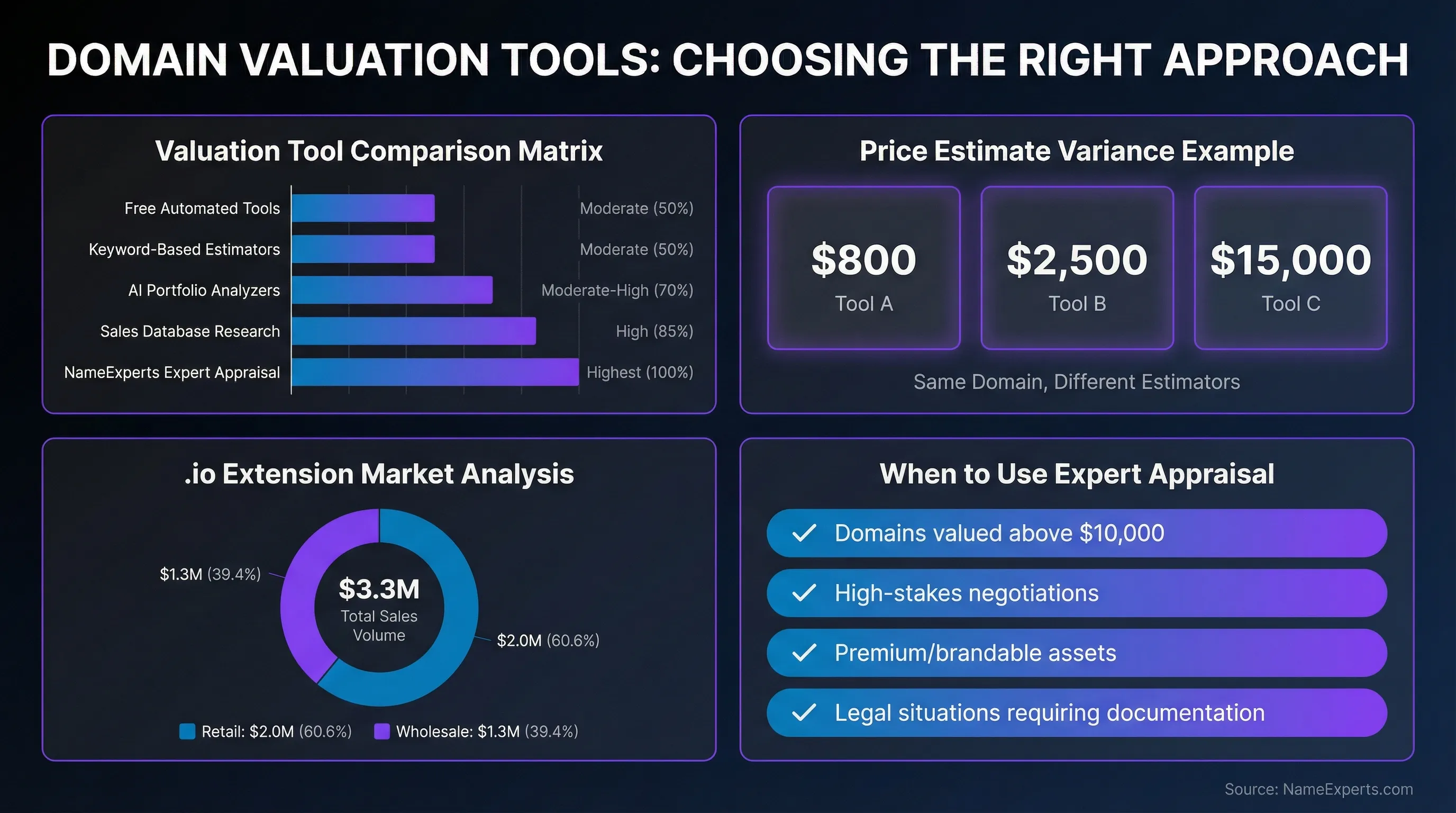
Valuing a domain name can feel like guesswork. You run a domain price estimator and get $2,500. You try another and it says $15,000. A third tool suggests $800. Which one is right? The truth is, automated tools use different methodologies—comparable sales, machine learning, keyword analysis—and each has strengths and blind spots. Understanding how these approaches work helps you choose the right method for your situation, whether you're managing a portfolio, pricing a single asset, or preparing for negotiation.
Key Takeaways
- Automated estimators use three core methodologies: comparable sales analysis, machine learning pattern recognition, and keyword/SEO value assessment
- Different tools excel in different scenarios—portfolio investors need bulk capabilities while single sellers benefit from detailed comparable data
- Brandable domains, strategic acquisitions, and premium assets often require expert appraisal beyond algorithmic estimates
- Combining multiple automated tools with market research and professional consultation yields the most reliable valuations
- Understanding tool limitations prevents overpricing mistakes and helps identify when human expertise adds value
How Domain Valuation Tools Actually Work
Most automated estimators rely on three fundamental approaches, often combining them in proprietary algorithms. Comparable sales analysis examines historical transaction data from auctions and marketplaces—if similar domains sold recently, the tool uses those prices as benchmarks. Machine learning algorithms recognize patterns across millions of sales, identifying which characteristics (length, keywords, extension) correlate with higher values. Keyword and SEO assessment evaluates search volume and advertiser bid data to estimate commercial potential.
These tools pull data from auction records, marketplace transactions, and expired listings. The challenge? Each platform emphasizes different factors. One might weight keyword strength heavily, while another prioritizes comparable sales. According to research on machine learning pricing models, the variety and quality of training data directly impact accuracy—which explains why the same asset can receive wildly different estimates.
No algorithm is perfect. Automated systems struggle with unique brandable names, emerging industry trends, and strategic buyer scenarios where value exceeds pure market data. Understanding these limitations helps you interpret results correctly.

Comparing Valuation Approaches
Choosing the right tool depends on your use case—whether you're valuing a single brandable asset or analyzing thousands in a portfolio. Here's how the main approaches compare:
| Tool/Approach | Best For | Methodology | Accuracy Level | Cost | Key Limitation |
|---|---|---|---|---|---|
| Free Automated Tools | Quick baseline estimates | ML + sales data | Moderate | Free | Generic valuations, limited context |
| Keyword-Based Estimators | SEO-focused domains | Search volume + CPC data | Moderate | Free/Paid tiers | Overvalues exact-match keywords |
| AI Portfolio Analyzers | Bulk portfolio review | AI + auction data | Moderate-High | Free | Best for standard domains |
| Sales Database Research | Market intelligence | Historical transactions | High (for comparables) | Free | Requires manual analysis |
| NameExperts Expert Appraisal | Premium/unique domains, negotiations | Human expertise + 200+ transactions | Highest | Custom pricing | Not instant; requires consultation |
For portfolio investors managing hundreds of assets, bulk processing capabilities matter most. Single sellers benefit from detailed comparable sales and probability estimates. Buyers need market intelligence to avoid overpayment. Each scenario demands a different toolset.
Confused by Conflicting Automated Valuations?
When domain price estimators give you wildly different numbers, you need expert insight that goes beyond algorithms. With 16+ years of experience and 200+ successful transactions including domains for HBO/Max.com and Monday.com, NameExperts provides the market intelligence and positioning advice that automated tools simply can't deliver.
Choosing the Right Approach for Your Situation
For Portfolio Investors
When managing 100+ domains, efficiency is critical. Prioritize tools offering bulk processing, CSV exports, and trend tracking. AI-powered platforms can analyze entire portfolios in minutes, helping you identify which assets to renew, develop, or list for sale. The strategy: use automated analysis for portfolio triage, then apply expert review to your top 10% highest-value holdings. For comprehensive guidance on maximizing your domain assets, explore our domain portfolio management services.
For Single Domain Sellers
Selling one asset requires detailed valuation reports, comparable sales data, and sell-through probability estimates. Cross-reference 2-3 automated tools to establish a price range, then research recent sales of similar domains. This approach provides negotiation leverage and realistic pricing expectations. Use the range from multiple sources to set your asking price and prepare for buyer discussions.
For Domain Buyers
Acquisition decisions demand market intelligence to avoid overpayment and identify undervalued opportunities. Start with automated screening to filter prospects, but consult experts before significant purchases. Verify seller asking prices against multiple data sources. Recent market analysis shows that retail and wholesale pricing can vary significantly—for .io extensions, total sales volume reached $3.3 million, with about $2 million retail and $1.3 million wholesale, illustrating the importance of understanding market context.
When Automated Estimators Fall Short
Algorithms excel with standard keyword domains that have clear comparables. They struggle in several critical scenarios. Brandable domains with invented words or creative spellings lack direct transaction history—an algorithm can't predict what a buyer will pay for a unique coined term. Strategic acquisitions where a domain matches a company's exact brand have value far beyond market data. Premium one-word or ultra-short domains in the six or seven-figure range have limited comparable sales, making statistical models unreliable.
Trademark considerations add complexity that automated tools miss. A domain might appear valuable based on keywords, but potential legal conflicts could make it worthless. Similarly, domains tied to emerging technologies or trends may not yet have training data reflecting their future value—algorithms trained on historical sales can't predict tomorrow's hot sectors.
We've seen cases where automated estimates missed actual sale prices by 10x or more, particularly for brandable assets with strong positioning potential. When the stakes are high, algorithmic limitations become costly.
When Professional Appraisal Adds Value
Expert consultation makes sense in specific situations where accuracy justifies the investment. High-stakes negotiations benefit from defensible valuations that account for market positioning and buyer psychology. Portfolio strategy decisions—which domains to develop versus sell versus hold—require understanding that goes beyond raw numbers.
For assets valued above $10,000, professional insight often pays for itself by preventing underpricing or failed negotiations. Legal situations requiring defensible valuations, such as estate planning or disputes, demand expert documentation. NameExperts combines data intelligence with over 16 years of market experience and 200+ successful transactions, including high-profile domains for brands like HBO/Max.com, Monday.com, and TripAdvisor.
Human pattern recognition identifies characteristics algorithms miss—industry timing, buyer market dynamics, brandability factors that don't reduce to keywords. The consultation process typically includes market positioning advice, comparable analysis with context, and negotiation support. For domains where precision matters, this expertise provides confidence that automated tools cannot. Learn more about our expert domain appraisal services.
Don't Let Algorithmic Blind Spots Cost You Thousands
Automated estimators struggle with brandable domains, strategic acquisitions, and premium assets—often missing actual sale prices by 10x or more. For domains where precision matters, NameExperts combines data intelligence with human pattern recognition to identify value that algorithms miss and prevent costly pricing mistakes.
Getting Accurate Valuations: A Hybrid Approach
The most reliable strategy combines multiple methods:
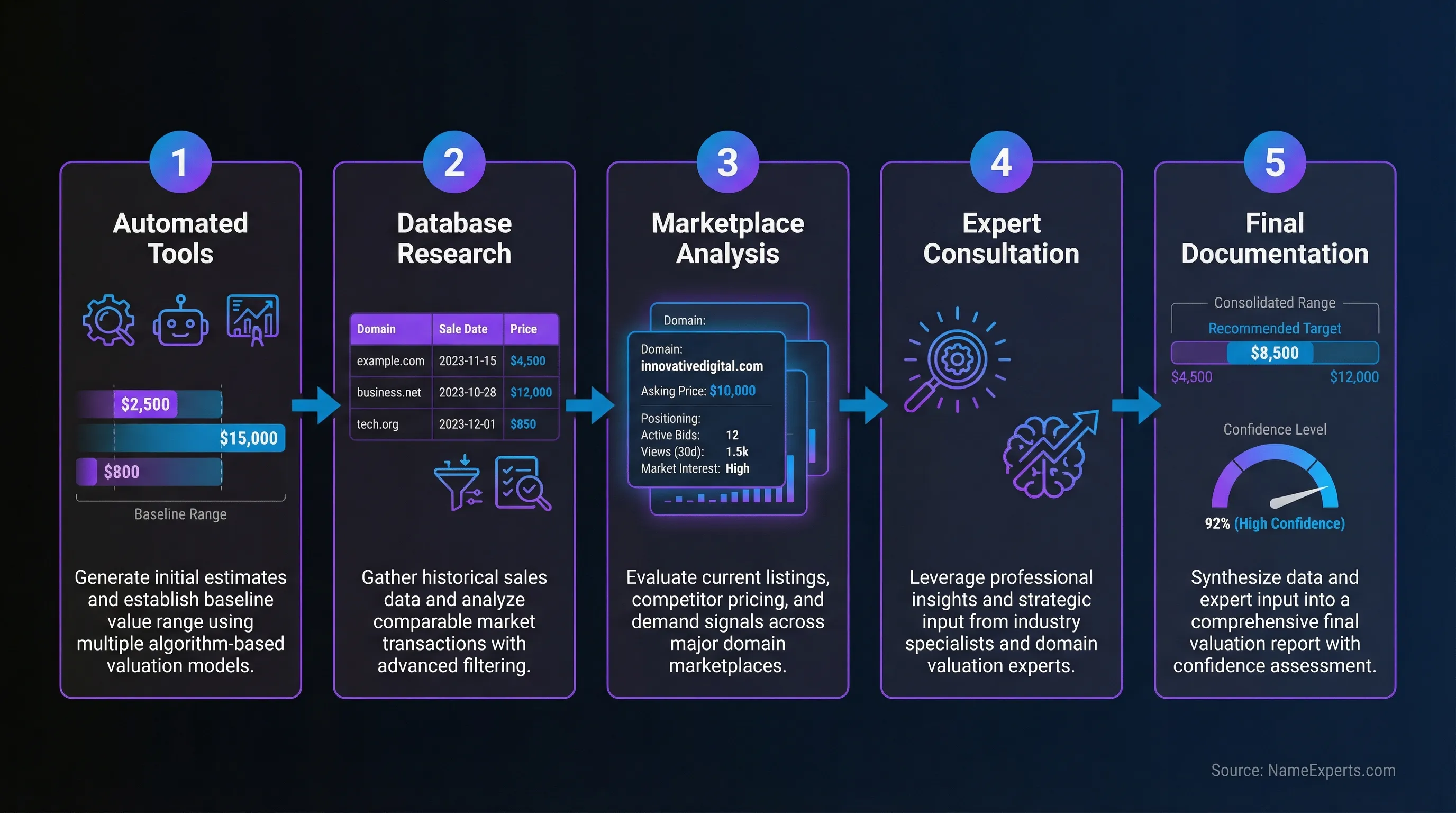
- Start with 2-3 free automated tools to establish a baseline range and identify major discrepancies
- Research comparable sales using transaction databases, filtering for similar length, extension, and keyword characteristics
- Check current marketplace listings to understand asking prices and market positioning for similar assets
- For valuable domains, consult with experts who understand nuances that algorithms miss—brandability, buyer targeting, negotiation dynamics
- Document your research to support pricing decisions and provide evidence during negotiations
This layered approach accounts for algorithmic strengths while compensating for their weaknesses. You get speed and data coverage from automation, market context from research, and strategic insight from expertise.
Market Factors That Influence Value
Understanding what drives pricing helps you interpret estimates correctly. Extension matters—according to industry trend analysis, .com continues to hold a stable share around 40% of registrations, though tech-aligned extensions like .ai and .io are growing. Length and memorability significantly impact value; shorter domains command premium prices because they're easier to brand and recall.
Keyword relevance to high-value industries increases worth, but exact-match SEO value has diminished as search engines prioritize content quality over domain keywords. Market demand fluctuates with industry trends—domains related to emerging technologies can spike in value rapidly, while those tied to fading sectors decline.
Domain age and history affect credibility. Older domains with clean records and established backlinks carry more authority. Conversely, domains previously used for spam or penalized by search engines may be worthless regardless of keywords. Always check history before relying on automated valuations.
Common Valuation Mistakes to Avoid
Relying on a single automated estimate is the fastest path to mispricing. Tools vary widely in methodology and accuracy—one data point tells you almost nothing. Ignoring comparable sales data means missing the only true measure of market value: what similar assets actually sold for recently.
Overemphasizing exact-match keywords leads to inflated expectations. While keyword domains have marketing value, search engines no longer grant them automatic ranking advantages. Focus instead on brandability and memorability. Neglecting domain history can be catastrophic—a great name with a spam record or trademark conflict may be unsellable.
Setting prices based on what you paid or what you need rather than market reality guarantees prolonged listing times. The market only cares about current demand and comparable transactions. Emotional attachment to a domain doesn't increase its value to buyers.
Making Informed Decisions
Different tools serve different purposes—match the methodology to your needs. Quick automated estimates work for standard keyword domains with clear comparables. Portfolio bulk analysis helps investors manage large holdings efficiently. Expert appraisal provides confidence for premium assets, unique brandables, and high-stakes negotiations.
For domains where accuracy matters most—six-figure assets, strategic acquisitions, portfolio decisions—professional consultation from NameExperts provides the market intelligence and positioning advice that algorithms cannot deliver. With 16+ years of experience and transactions including major brand domains, we combine data with the human insight that turns valuations into successful deals. To understand the full scope of what makes domains valuable, read our comprehensive guide on how to value a domain name.
Ready to understand what your domain is truly worth? Contact NameExperts for expert appraisal that goes beyond automated estimates.
Work With a Domain Expert
Automated domain price estimators provide a starting point, but they can't account for brandability, buyer psychology, or strategic positioning—factors that often determine whether you close a deal or leave money on the table. Whether you're managing a portfolio, pricing a premium asset, or preparing for negotiation, NameExperts delivers the market intelligence and expert guidance that turns valuations into successful transactions. With 16+ years of domain brokerage experience and proven results
Get Started Free







Frequently Asked Questions
Each tool uses different methodologies—some prioritize comparable sales data, others weight keyword strength or machine learning patterns—and the variety in their training data creates significant valuation discrepancies, sometimes varying by 10x or more.
Expert appraisal adds value for domains worth $10,000+, brandable assets without clear comparables, strategic acquisitions, high-stakes negotiations, or legal situations requiring defensible valuations where accuracy justifies the investment.
Use 2-3 automated estimators to establish a baseline range, research comparable sales in transaction databases, check current marketplace listings for similar assets, and consult experts for valuable or unique domains to account for factors algorithms miss.
While keyword domains retain marketing value, their SEO premium has diminished significantly as search engines prioritize content quality over domain keywords—brandability and memorability now drive pricing more than exact-match search terms.