

Key Takeaways
- Businesses with 50+ domains typically need more than basic registrar tools to maintain security and efficiency
- Effective management spans security protocols, renewal oversight, strategic acquisitions, and brand protection across multiple extensions
- The right solution depends on portfolio size, asset value, and strategic complexity rather than one-size-fits-all approaches
- Expert consultation becomes valuable when portfolio value exceeds $100K or complex brand architecture decisions arise
A business that started with one domain name five years ago now manages 30+ across brands, redirects, and defensive registrations. The simple registrar dashboard that once seemed sufficient now feels inadequate. Renewal dates scatter across spreadsheets, security protocols vary by domain, and nobody's quite sure which extensions still serve a purpose.
This progression from simple registration to complex portfolio oversight is common. As digital assets multiply, the tools and strategies for managing them must evolve. Understanding when to upgrade from basic registrar features to dedicated software—or when to bring in specialized expertise—can save thousands in costs while protecting valuable brand assets.
What Domain Portfolio Management Actually Involves
Domain portfolio management extends far beyond keeping track of renewal dates. It encompasses the strategic oversight of all domain names a business controls, ensuring they remain secure, current, and aligned with organizational goals. As businesses grow, they typically accumulate multiple domains across various extensions for brand protection, geographic expansion, and defensive purposes.
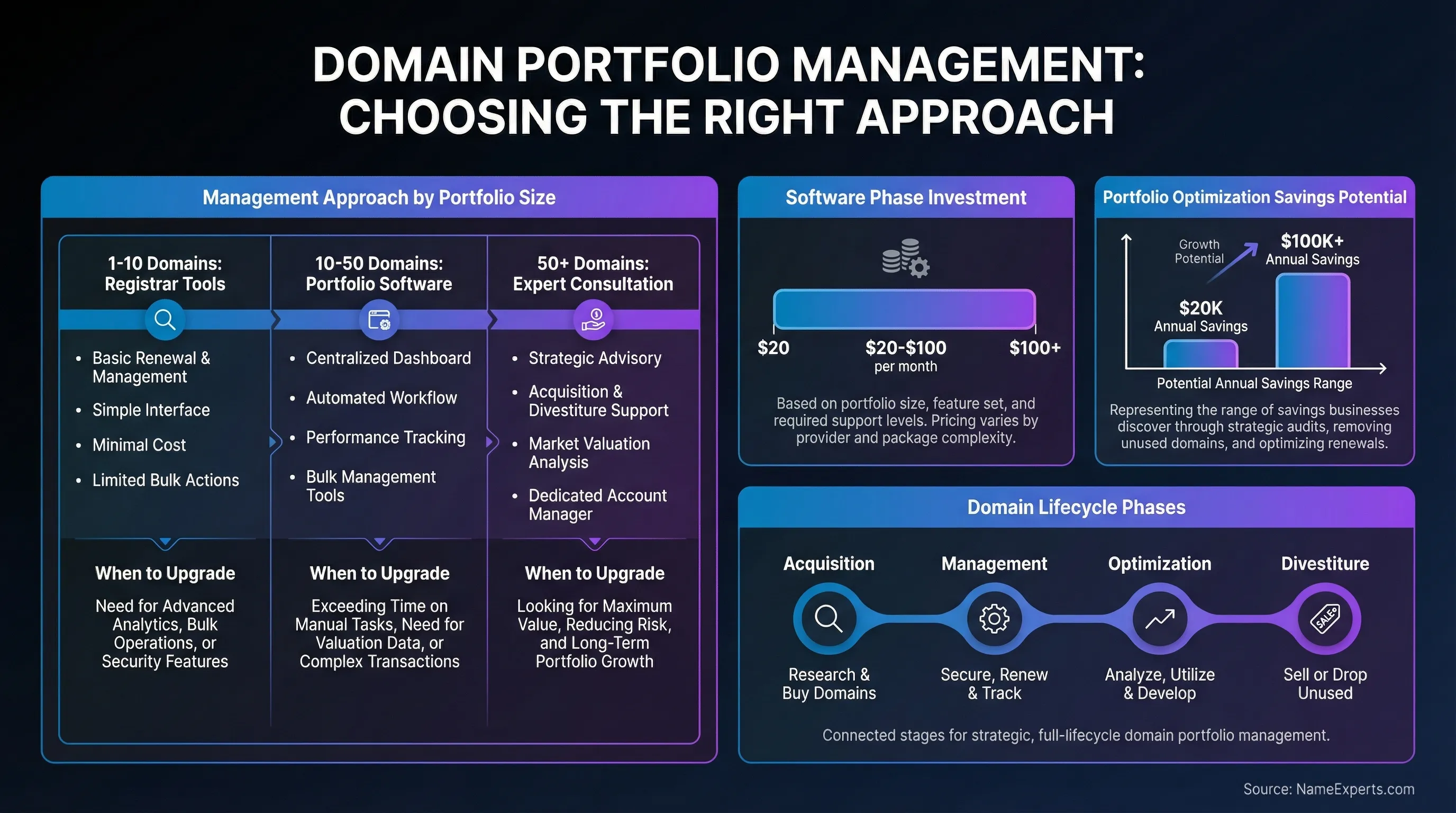
Four core pillars define effective management. Security and access control protect against unauthorized transfers and hijacking attempts. Renewal management prevents accidental expiration of valuable assets. Portfolio optimization identifies underutilized domains and consolidation opportunities. Strategic acquisitions align new registrations with business expansion and brand protection needs.
The stakes are substantial. Domain hijacking incidents can devastate businesses, disrupting operations and damaging customer relationships when cybercriminals seize control of a company's digital front door. Poor management creates vulnerability to these threats while also wasting budget on unnecessary registrations.
The lifecycle follows a clear pattern: acquisition of relevant names, ongoing management of security and renewals, periodic optimization to align with current strategy, and eventual divestiture of assets that no longer serve business purposes. Each phase requires different skills and tools.
Choosing the Right Management Approach for Your Portfolio Size
Not every business needs the same level of management sophistication. The appropriate solution depends on portfolio size, asset value, and strategic complexity rather than arbitrary preferences.
| Portfolio Size | Best Solution | Key Features | When to Upgrade |
|---|---|---|---|
| 1-10 domains | Registrar Tools | Basic renewals, DNS, privacy protection | Managing multiple brands or international expansion |
| 10-50 domains | Portfolio Software | Centralized dashboard, bulk operations, monitoring | Acquiring premium domains or facing brand threats |
| 50+ domains or premium assets | Expert Consultation | Strategic audits, acquisition brokerage, brand architecture | Portfolio value exceeds $100K or complex brand protection needed |
The DIY Phase (1-10 Domains)
Standard registrar tools handle basic needs effectively when portfolios remain small. Built-in dashboards provide renewal reminders, DNS configuration, and privacy protection. This approach works well for businesses with straightforward requirements: a primary domain, perhaps a few common misspellings, and maybe country-specific extensions for key markets.
Limitations emerge as complexity grows. Managing domains across multiple registrars creates fragmentation. Tracking which names serve which purposes becomes difficult. Security protocols may be inconsistent. When you find yourself maintaining spreadsheets to supplement registrar dashboards, it's time to consider the next tier.
The Software Phase (10-50 Domains)
Dedicated portfolio management platforms centralize oversight regardless of where domains are registered. These tools offer bulk operations for updating DNS records, consolidated renewal calendars, and monitoring features that alert you to expiration risks or unauthorized changes.
Monthly costs typically range from $20-100 depending on portfolio size and feature requirements. The investment pays off through time savings and reduced risk. However, software excels at administrative efficiency rather than strategic decision-making. It won't tell you which premium domain to pursue or how to structure defensive registrations across new extensions.
The Expert Consultation Phase (50+ or High-Value)
When portfolio value exceeds $100K or strategic complexity increases, businesses often benefit from specialized expertise. At NameExperts, we've spent 16+ years advising companies through 200+ transactions, understanding that sophisticated portfolios require more than software automation.
Expert consultation addresses challenges that tools alone cannot solve: negotiating premium domain acquisitions without revealing your identity, conducting strategic audits that identify $20K-$100K+ in annual savings through consolidation, and developing brand architecture that protects intellectual property across hundreds of extensions.
Complexity triggers beyond sheer size include international expansion requiring country-code domain strategy, M&A activity necessitating portfolio integration, trademark conflicts demanding legal expertise, and premium acquisitions where market knowledge prevents overpayment.

Struggling With Portfolio Complexity?
When your domain assets exceed basic registrar capabilities but you're unsure whether software or expert guidance is the right next step, schedule a no-obligation portfolio assessment to identify exactly where your current approach is creating risk or wasting budget.
Essential Portfolio Management Practices
Regardless of which management tier fits your current needs, certain practices form the foundation of effective oversight:
- Centralize under one registrar or management system – Consolidation reduces missed renewals and simplifies access control. ICANN transfer policies facilitate moving assets to your preferred provider, though the process typically requires up to 5 days per domain once initiated.
- Implement security layers – Registry lock prevents unauthorized transfers of premium assets. Two-factor authentication protects account access. Privacy protection shields registrant information from public WHOIS databases. Regular access audits ensure only authorized personnel can make changes.
- Conduct annual portfolio audits – Review each asset's purpose and performance. Industry analysis shows that portfolios often contain unused assets that drain renewal budgets without serving business objectives. Systematic evaluation identifies consolidation opportunities and gaps in defensive coverage.
- Document your domain strategy – Written policies clarify brand architecture, geographic coverage rationale, defensive registration criteria, and renewal budget allocation. Documentation prevents confusion when staff changes and ensures consistent decision-making across departments.
- Monitor trademark and brand threats – Watch for similar registrations by competitors, typosquatting attempts, and expired domains in your industry that could be repurposed against you. Early detection allows faster response to potential infringement.
- Plan acquisition strategy – Determine when pursuing premium domains makes sense, allocate budget appropriately, and establish negotiation protocols. For high-stakes acquisitions, stealth representation prevents sellers from inflating prices when they know a well-funded buyer is interested.
When to Bring in Domain Expertise
Three scenarios typically justify moving beyond software-only solutions to specialized consultation:
Premium domain acquisitions require market knowledge that software cannot provide. When pursuing six-figure purchases, understanding fair market value prevents overpayment. Stealth negotiation keeps your identity confidential, avoiding the price inflation that occurs when sellers know a major brand is interested. Our experience with 200+ transactions helps clients secure assets at reasonable valuations.
Portfolio optimization through strategic audits often uncovers substantial savings. Systematic evaluation identifies redundant registrations, consolidation opportunities, and divestiture candidates. Businesses frequently discover they're spending $20K-$100K+ annually on domains that serve no current purpose—budget that could be reallocated to strategic acquisitions or other priorities.
Brand protection scenarios demand specialized knowledge of trademark law, dispute resolution procedures, and defensive registration strategy. When facing cybersquatting, trademark conflicts, or coordinated brand attacks, expertise in UDRP proceedings and legal remedies becomes essential. Developing comprehensive protection across new extensions requires understanding which registrations provide genuine value versus unnecessary expense.
At NameExperts, we position ourselves as the evolution beyond software-only solutions. Our boutique approach combines deep industry relationships with personal expertise that delivers ROI on complex acquisitions and strategic decisions where automated tools reach their limits. We've helped companies like Monday.com navigate complete rebranding lifecycles, understanding that sophisticated domain strategy requires human judgment alongside technical capability.
The decision to engage expert consultation typically hinges on portfolio value, transaction complexity, and strategic importance. When your digital assets represent significant investment or your brand faces sophisticated threats, specialized guidance protects and optimizes those assets more effectively than software alone.
Premium Acquisitions Require Market Intelligence
Software can't tell you whether a six-figure domain is fairly priced or negotiate on your behalf while protecting your identity. If you're considering a strategic acquisition that could define your brand for decades, connect with our acquisition specialists who've navigated 200+ transactions and understand how to secure premium assets without overpaying.
Ready to Optimize Your Domain Portfolio?
Whether you're managing 50+ domains, pursuing a premium acquisition, or discovering that annual renewals are draining $20K-$100K on assets that no longer serve your strategy, the right expertise pays for itself. Our boutique approach combines 16+ years of market knowledge with the personal attention your valuable digital assets deserve. Get a strategic portfolio consultation and discover exactly where your current approach is creating unnecessary risk or missing optimization opportunities.
Get a strategic portfolio consultation







Frequently Asked Questions
A domain portfolio is the complete collection of domain names owned by a business or individual, serving purposes ranging from primary brand presence to defensive registrations and geographic market coverage.
Well-chosen premium names can generate substantial returns, though success requires market knowledge, patience for the right buyer, and capital to hold assets through multi-year holding periods before profitable exits materialize.
The optimal solution depends on your portfolio size and complexity—registrar tools suffice for 1-10 names, dedicated platforms like DomainTools or CSC Digital Brand Services handle 10-50 assets, while portfolios exceeding 50 domains or $100K in value typically benefit from expert consultation alongside software.
.com remains the dominant extension for brand credibility and user recall in 2026, while .biz serves niche purposes for specific business contexts but lacks the universal recognition and resale value of .com assets.