
Key Takeaways
- Premium domains are short, memorable, keyword-rich names that command higher prices due to their branding and marketing value
- Value is determined by brandability, memorability, SEO potential, and market demand—not just price tags
- Two main types exist: registry premium (set by registries with elevated renewal fees) and aftermarket premium (resold by owners, typically with standard renewals)
- Professional appraisal and negotiation expertise can save 20-40% on acquisition costs
- These assets often appreciate over time and reduce long-term marketing expenses through improved recall and trust
When you search for your ideal web address and discover it costs $5,000 instead of $15, you've encountered the world of premium domains. These high-value names represent digital real estate comparable to beachfront property—scarce, desirable, and commanding prices that reflect their strategic importance.
Defining Premium Domains
A premium domain is a web address identified by registries or current owners as having exceptional market value. These names stand out because they're short, memorable, easy to spell, and often contain high-intent keywords or strong brand potential.
Think of examples like Hotels.com, Insurance.com, or Voice.com. Each uses common dictionary words that millions search for regularly. This combination of brevity and relevance creates instant recognition and trust—qualities that translate directly into business value.
Unlike standard registrations priced at $10-20 annually, these names carry higher initial costs and sometimes elevated renewal fees. The investment reflects their ability to accelerate brand recognition, improve discoverability, and establish immediate credibility in competitive markets.
Key Characteristics That Define Value
Several factors determine whether a name qualifies as premium and justify its pricing:
Length and Memorability
Shorter names are inherently more valuable. They're easier to remember, type, and communicate verbally. A concise address like Cars.com outperforms thebestcarsfortravelers.com in every practical measure—from word-of-mouth marketing to reducing user error when typing.
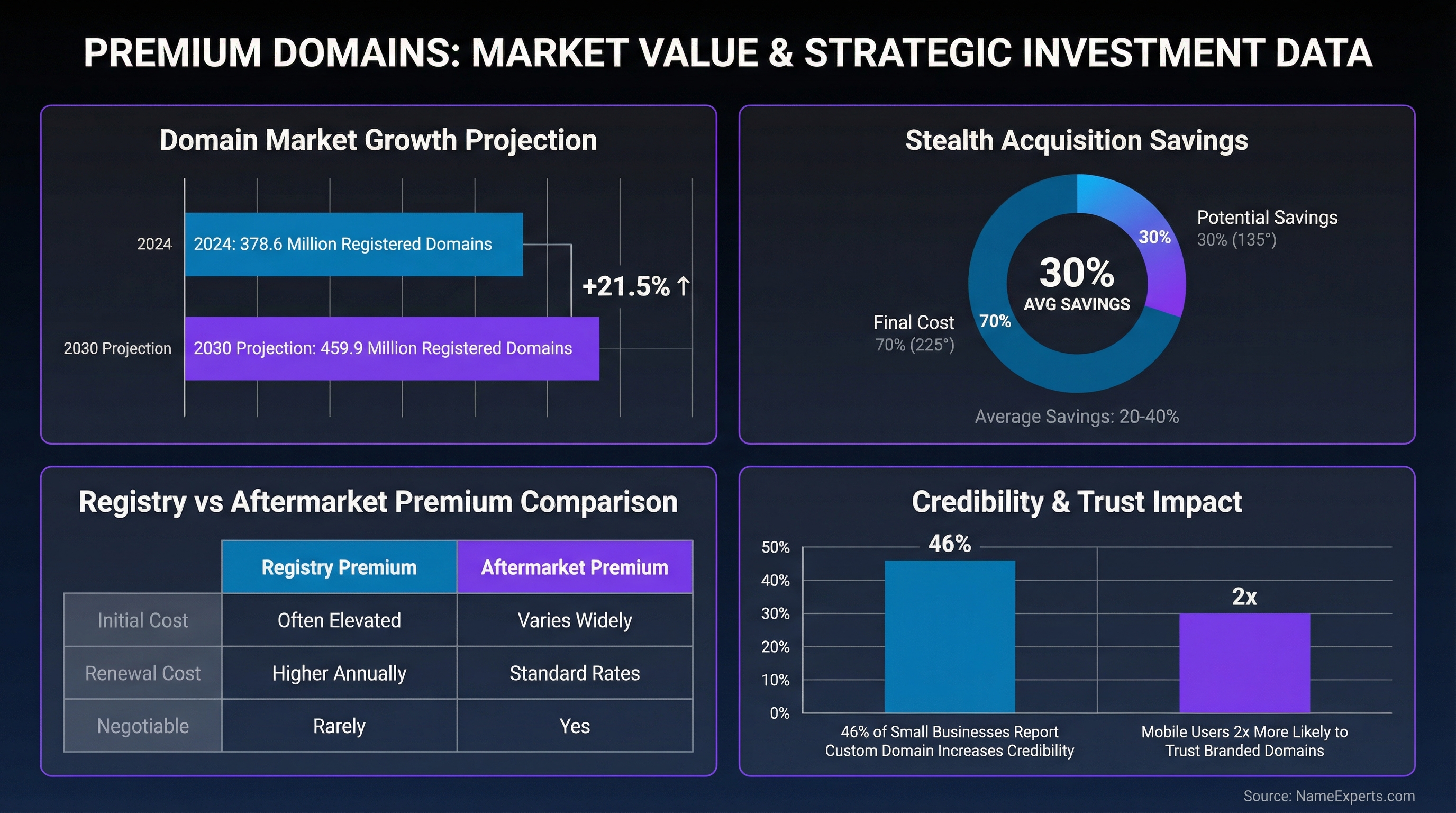
Industry data shows that 378.6 million domain names were registered in 2024, with the market projected to reach 459.9 million by 2030. As this namespace becomes more crowded, short, memorable options become increasingly scarce and valuable.
Brandability and Trust
Premium names function as instant brand identifiers. They convey professionalism and legitimacy before visitors even reach your website. This immediate credibility matters especially in industries like financial services, healthcare, or e-commerce where trust directly impacts conversion rates.
Research indicates that 46% of small businesses report that a custom domain increases credibility, while mobile users are twice as likely to trust sites with branded addresses versus generic subdomains.
SEO and Search Intent
While search engines don't rank domains based solely on keywords anymore, names containing relevant terms still offer advantages. They signal topic relevance to both users and algorithms, potentially improving click-through rates from search results.
More importantly, keyword-rich addresses generate type-in traffic—visitors who enter your URL directly into browsers because it matches their search intent. According to SEO research, organic search produces 33% of overall website traffic, and the top organic result receives significant click-through advantages over lower positions. A relevant, memorable name helps capture both direct and search-driven visitors.
Extension Quality
The domain extension (TLD) significantly impacts value. The .com extension remains the gold standard, with over 90% of successful startups valued at $100M+ launching with .com domains. Other valuable extensions include .net, .org, and industry-specific options like .tech or .io for technology companies.

Types of Premium Domains
Understanding the different categories helps clarify pricing structures and long-term costs:
| Feature | Registry Premium | Aftermarket Premium |
|---|---|---|
| Price Set By | Registry/Registrar | Current Owner |
| Initial Cost | Often elevated | Varies widely |
| Renewal Cost | Typically higher annually | Usually standard rates |
| Negotiable | Rarely | Yes, through brokers |
| Availability | Listed on registrar sites | Aftermarket platforms, private sales |
Registry Premium Domains
Registries designate certain names as premium from the start based on factors like keyword popularity, character length, or commercial intent. These carry higher registration and renewal fees that remain elevated year after year. The registry controls pricing, making negotiation difficult.
Aftermarket Premium Domains
These were previously registered and are now being resold by owners, investors, or companies. Their value typically comes from real-world usage history, SEO signals, or established brand interest. After the initial purchase, they usually renew at standard rates—a significant long-term cost advantage.
With our 16+ years of experience facilitating over 200 transactions for brands like HBO Max.com, Monday.com, and TripAdvisor, we've seen how aftermarket acquisitions often provide better value when approached strategically.
Not Sure If That Premium Domain Is Worth the Price?
With 16+ years of experience and 200+ transactions, we provide objective valuations that remove the guesswork. Our market analysis and comparable sales data give you the leverage to negotiate confidently—or walk away when the numbers don't make sense.
Determining If the Investment Makes Sense
Not every expensive name justifies its price tag. Here's how to evaluate whether a specific option aligns with your business objectives:
Brandability Assessment
Does it align with your brand identity? Is it memorable and easy to communicate verbally? Does it avoid trademark conflicts? A name that checks these boxes becomes a long-term asset rather than just an address.
SEO and Traffic Potential
Evaluate keyword search volume and commercial intent. Consider type-in traffic potential—how many people might enter this address directly? For aftermarket names, examine existing backlink profiles and domain authority metrics that could provide immediate SEO advantages.
Market Comparables
Research recent sales of similar names. According to domain aftermarket data, the average sale price ranges from $2,000-3,000, with a median of $500-800. Understanding these benchmarks helps identify fair pricing and negotiation opportunities.
Professional Appraisal Services
For significant investments, professional domain valuation removes guesswork. At NameExperts, we evaluate brandability, SEO metrics, comparable sales data, and market positioning to provide objective valuation reports. This analysis offers negotiation leverage when approaching sellers and helps justify investments to stakeholders.
Automated appraisal tools provide quick estimates, but expert human analysis considers nuances that algorithms miss—especially for names over $10,000 where precision matters most.
Strategic Acquisition Approaches
How you acquire a name significantly impacts final cost and transaction success:
Direct Registrar Purchase
For registry premium names, purchasing directly through registrars offers straightforward transactions but non-negotiable pricing. Always verify renewal costs before completing purchase—some carry elevated annual fees that compound over time.
Aftermarket Platforms
Marketplaces offer "Buy Now" or "Make Offer" listings with escrow services for secure transactions. These platforms provide transparency but may include commission fees that increase total cost.
Stealth Acquisition Through Brokers
When acquiring brand-critical names, stealth negotiation prevents price inflation. We approach owners without revealing buyer identity, which often results in 20-40% savings compared to direct inquiries from recognizable brands.
For example, a fintech startup approached us seeking a .com already owned by an investor. The asking price was $75,000. Through stealth negotiation and market analysis demonstrating comparable sales in the $35,000-$45,000 range, we secured it for $42,000—saving $33,000 while avoiding a bidding war.
This approach makes particular sense for competitive industries, brand-critical names, or trademark-adjacent addresses where revealing buyer interest could trigger inflated pricing.

Negotiation Best Practices
Start with market research on comparable sales. Never reveal maximum budget upfront. Emphasize mutual benefit and quick transaction timelines. For high-value names, consider payment plans or earnouts that spread cost while securing ownership. Learn more about effective negotiation strategies for premium domain purchases.
Avoid Paying 20-40% More Than You Should
When you approach domain owners directly—especially for brand-critical names—sellers often inflate prices. Our stealth acquisition service protects your identity during negotiations, securing fair market pricing without triggering bidding wars. We've saved clients tens of thousands on single transactions.
Investment Considerations and ROI
Viewing these acquisitions as strategic investments rather than expenses changes the cost-benefit equation:
Benefits of Ownership
- Instant credibility: Professional names signal legitimacy and stability
- Reduced marketing costs: Higher type-in traffic and better recall decrease customer acquisition expenses
- SEO advantages: Keyword-rich, authoritative names strengthen organic visibility
- Competitive differentiation: Stand out in crowded markets with memorable branding
Cost-Benefit Analysis Framework
Compare the acquisition cost to 12-24 months of paid advertising budget. Calculate potential traffic increases and conversion improvements. Factor in brand equity and long-term asset appreciation—many such names maintain or grow their value over time.
When Premium Makes Strategic Sense
These investments typically deliver strongest returns when launching new brands, rebranding existing businesses, entering competitive markets where credibility is crucial, or building long-term digital asset portfolios. They're particularly valuable when current addresses create confusion or limit growth potential.
When to Consider Alternatives
Early-stage startups with limited budgets might prioritize other investments initially. Creative branding can sometimes overcome address limitations. Internal tools or non-customer-facing applications rarely justify premium pricing.
Legal and Trademark Considerations
Before finalizing any acquisition, conduct thorough trademark searches to avoid future disputes. Understand UDRP (Uniform Domain-Name Dispute-Resolution Policy) risks and the distinction between legitimate investment and cybersquatting.
Perform due diligence on history for aftermarket names—previous use, legal disputes, or negative associations could impact value. For significant investments, consult intellectual property attorneys to verify clear ownership paths.
Making Informed Decisions
Premium domains represent strategic business assets, not just web addresses. Their value lies in accelerating brand recognition, improving discoverability, and establishing immediate market credibility. The key is matching investment to business objectives through proper valuation and expert negotiation.
Whether you're seeking to acquire a brand-critical name or evaluate if a specific option justifies its price, professional guidance protects your interests and maximizes value. With our 16+ years of experience and 200+ transactions including high-profile acquisitions for major brands, we provide the market intelligence, negotiation expertise, and stealth acquisition services that deliver results.
Ready to explore premium options for your business? Learn more about our domain acquisition services for a confidential consultation on your domain strategy.
Work With a Domain Expert
The difference between a smart domain investment and an expensive mistake comes down to market intelligence and expert negotiation. Whether you need objective valuation, stealth acquisition to prevent price inflation, or strategic guidance on whether a premium domain justifies its cost, we bring 16+ years of experience and a no-bullshit approach to protecting your interests. We've helped brands like HBO Max.com, Monday.com, and TripAdvisor acquire the right domains at fair prices. Let's discuss
Claim Your Free Consultation Today







Frequently Asked Questions
A premium domain is a web address with exceptional market value due to characteristics like short length, memorable words, keyword relevance, or strong brand potential—commanding prices significantly higher than standard $10-20 registrations.
These names typically range from a few hundred to several thousand dollars, with aftermarket sales averaging $2,000-3,000 and median prices around $500-800, though highly valuable addresses can reach six or seven figures depending on brandability and market demand.
Registries and registrars display these higher-priced names in search results with elevated pricing, while aftermarket listings show asking prices well above standard registration fees—typically identified by short length, dictionary words, .com extensions, or high commercial intent keywords.
The investment makes strategic sense when launching brands, entering competitive markets, or rebranding—delivering value through instant credibility, reduced marketing costs, improved recall, and long-term asset appreciation that often outweighs the initial acquisition cost.


