
Key Takeaways
- All .dev domains require HTTPS encryption via the HSTS preload list for enhanced security
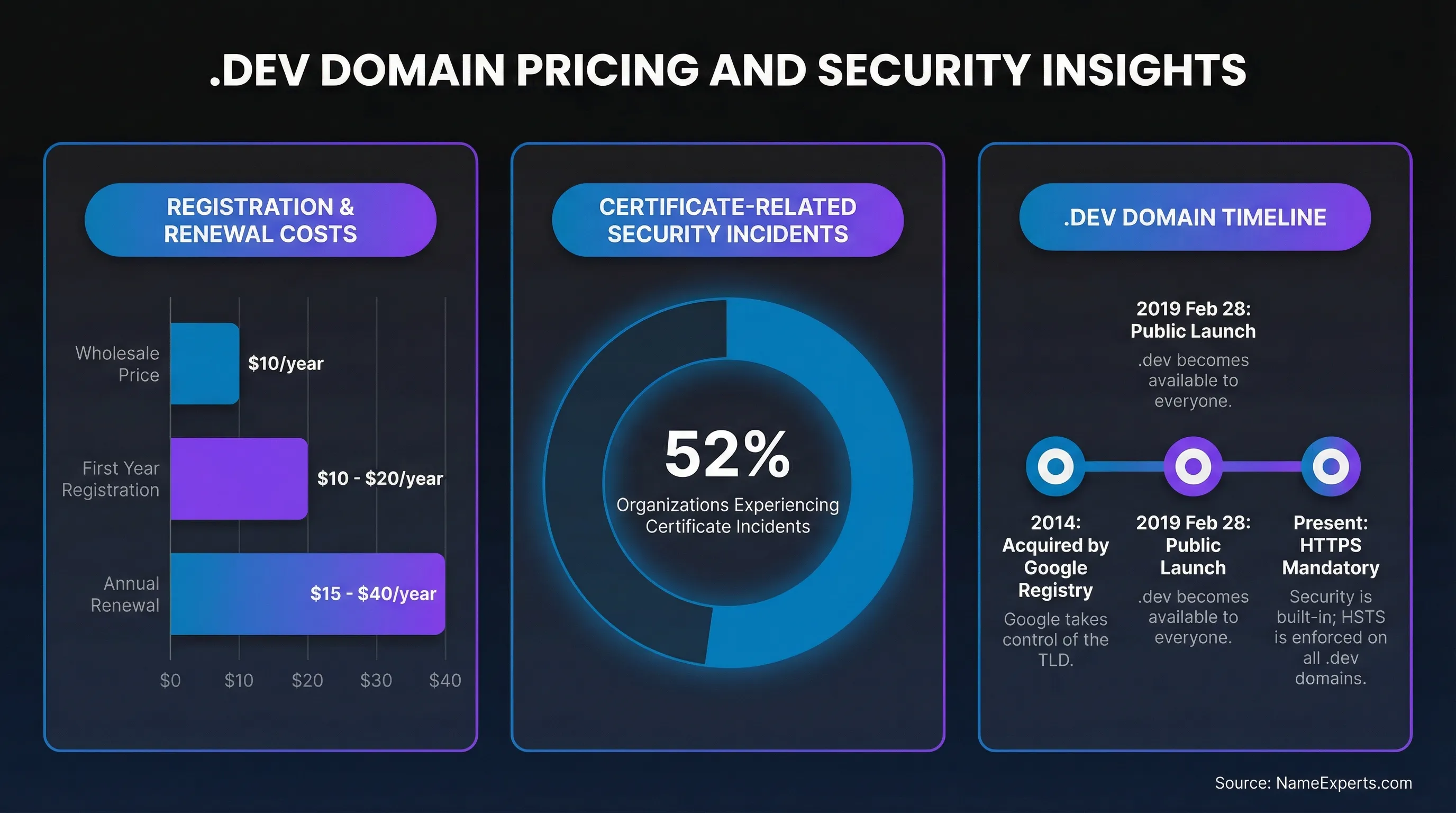
- Registration costs range from $10-$20/year across major registrars, with renewal prices typically $15-$40/year
- Ideal for developers, tech portfolios, API documentation, and open-source projects
- Owned and operated by Google Registry since 2014, launched to the public on February 28, 2019
- Built-in security protects against SSL-stripping attacks without additional configuration
The .dev domain extension has become the go-to choice for developers, tech companies, and software projects seeking a namespace that instantly communicates technical expertise. Unlike traditional domain extensions where HTTPS is optional, every .dev website must use secure connections—a requirement that sets it apart in the domain landscape and provides inherent security benefits for developers and their users.
What Is a .dev Domain? Understanding the Basics
A .dev domain is a top-level domain (TLD) specifically designed for developers and technology-focused websites. Google acquired the extension in 2014 through Charleston Road Registry and opened it for public registration on February 28, 2019 following a sunrise period for trademark holders.
What makes this extension unique is its mandatory HTTPS requirement. According to the HSTS preload list, the entire namespace is included in browsers' built-in security lists. This means browsers automatically upgrade all HTTP requests to HTTPS and refuse to connect if a secure connection isn't available. Major browsers including Chrome, Firefox, Safari, and Edge all enforce this requirement.
The extension differs from alternatives like .com, .io, and .tech in several important ways. While those TLDs allow sites to operate without encryption, .dev mandates it from day one. This creates a more secure environment but also requires domain owners to obtain and configure SSL certificates before their sites will function properly in browsers. For a comprehensive overview of different domain extensions and how they compare, understanding the broader TLD landscape can help you make informed decisions about your online presence.

Why .dev Domains Are Inherently More Secure
The security advantage comes from HTTPS enforcement through the HSTS (HTTP Strict Transport Security) preload list. When you visit a website, your browser typically makes an initial HTTP request before upgrading to HTTPS if the site supports it. This brief window creates vulnerability to SSL-stripping attacks, where malicious actors intercept that first request and prevent the secure upgrade.
With .dev domains, browsers skip this vulnerable step entirely. They know from their preloaded list that these sites must use HTTPS, so they never attempt an insecure connection. This protection works even on the very first visit to a site, unlike standard HSTS which only protects users after they've visited once.
The HSTS preload list is maintained by the Chromium project and shared across browsers. Once a domain is on this list, it receives protection across the entire ecosystem without site owners needing to configure anything beyond obtaining an SSL certificate.
This built-in security particularly benefits developers working on sensitive projects, API documentation containing authentication examples, or any technical resource where security matters. The encryption protects both the site owner and visitors from man-in-the-middle attacks and data interception.
However, this security comes with a requirement: you must have an SSL/TLS certificate configured before your site will load in browsers. Free options like Let's Encrypt make this straightforward, but it's an additional step compared to traditional domains. According to SSL certificate lifecycle management research, renewal is the most common point of failure, with 52% of organizations experiencing certificate-related incidents in recent years.
Can't Find the Perfect .dev Domain for Your Project?
The best developer-focused domain names are often already registered by others. Our stealth acquisition specialists can help you secure premium .dev domains that are currently owned—without revealing your identity or inflating the price.
Who Should Use a .dev Domain? Best Use Cases
The extension serves several distinct audiences within the technology sector:
Software developers and engineers use these domains for personal portfolios showcasing their projects, skills, and experience. The extension immediately signals technical expertise to potential employers or clients.
Open-source projects and communities benefit from the developer-focused namespace. Projects can create memorable addresses for documentation, downloads, and community resources. Examples include major projects that have adopted the extension for their developer-facing resources.
API documentation and technical hubs represent another ideal use case. Companies like Stripe, Mozilla MDN, and Slack use these domains for their developer documentation, creating clear separation between marketing sites and technical resources.
Developer tools and platforms leverage the extension to establish credibility. Whether you're building a code editor, testing framework, or deployment platform, the TLD communicates your target audience immediately.
Tech startups and SaaS companies often choose this extension when their primary audience consists of developers or technical decision-makers. It helps position the company within the developer ecosystem.
Programming language communities and frameworks use these domains for official resources, tutorials, and community hubs. The extension helps establish authority and makes resources easy to find.
Tech blogs and educational content creators use the extension to signal their focus on development topics and technical tutorials.
When NOT to use this extension: If your primary audience isn't technical or developer-focused, traditional extensions like .com may serve you better. Non-tech businesses, general audience websites, and consumer-facing brands typically benefit from more familiar extensions that don't require explanation.
.dev Domain Pricing: What to Expect
Registration costs vary by registrar but generally fall within predictable ranges. The wholesale price from Google Registry is $10/year, which represents the baseline cost before registrars add their markup and services.
Average market pricing shows registration typically costs $10-20 for the first year, with renewals ranging from $15-40 annually. Transfer pricing usually matches the renewal cost and includes a one-year extension.
Price variations between registrars reflect different business models and included services. Some registrars operate at near-wholesale pricing with minimal markup, while others bundle additional services like email hosting, website builders, or premium support.
Hidden costs to watch for include ICANN fees (typically $0.18-0.20 per year), privacy protection (though many registrars now include this free), and SSL certificates. While free SSL options exist through Let's Encrypt, some registrars charge for certificates or include only basic certificates with paid upgrades for advanced features.
When comparing registrars, look for transparent pricing with no hidden renewal fees, included WHOIS privacy protection, and free or low-cost SSL certificate options. For a detailed breakdown of domain name costs across different extensions and what factors influence pricing, understanding the full cost picture helps you budget appropriately for your .dev domain investment.
How to Choose the Right .dev Domain Name
Selecting the right domain name requires balancing several factors. Brandability often matters more than keyword inclusion—a memorable, unique name typically performs better than a generic keyword-stuffed alternative.
Keep names short and memorable when possible. Shorter domains are easier to type, remember, and share. They also look cleaner in email signatures and marketing materials.
Avoid trademark conflicts by researching existing trademarks in your industry before committing to a name. A trademark dispute can force you to abandon a domain after investing time and resources building your brand around it.
Check domain availability across social platforms to maintain consistent branding. If your desired domain is available but the matching social handles aren't, consider whether the inconsistency will cause confusion.
Consider premium domains when standard options aren't available or when a particularly valuable name aligns with your long-term strategy. Premium domains command higher prices but can provide significant branding advantages. Our comprehensive guide on choosing a domain name for your business offers additional strategies for selecting names that support long-term growth and brand recognition.
Considering a Premium .dev Domain Investment?
Not sure if that premium domain is worth the asking price? With 15+ years of experience in the digital real estate marketplace, we provide honest, transparent domain appraisals that help you avoid overpaying and negotiate fair market prices.
Setting Up Your .dev Domain: Technical Requirements
Getting your domain operational requires several steps beyond simple registration:
Step 1: Register your domain through your chosen registrar. The registration process is straightforward and similar to other TLDs. If you're new to domain registration, our detailed guide on how to buy a domain name walks you through the entire process from selection to final purchase.
Step 2: Obtain an SSL certificate. Free options include Let's Encrypt, which provides automated certificate issuance and renewal. Paid options offer extended validation, wildcard certificates for subdomains, and additional warranty protection. Many hosting providers include free SSL certificates as part of their service.
Step 3: Configure HTTPS on your web server. This involves installing your SSL certificate and configuring your web server (Apache, Nginx, etc.) to serve content over HTTPS. Most hosting providers offer one-click SSL installation tools that simplify this process.
Step 4: Set up DNS configuration and nameservers. Point your domain to your hosting provider by updating nameserver records or creating A/AAAA records pointing to your server's IP address. DNS changes typically propagate within 24-48 hours.
Step 5: Test HTTPS enforcement. Verify your site loads properly over HTTPS and that HTTP requests automatically redirect to the secure version. Test in multiple browsers to ensure consistent behavior.
Common setup issues include certificate installation errors, mixed content warnings (when HTTPS pages load HTTP resources), and DNS propagation delays. Most hosting providers offer support for troubleshooting these issues.
Development environment considerations: If you're using .dev for local development, note that you'll need to configure SSL certificates even for localhost testing. Many developers now use .localhost or .test for local development to avoid this requirement, reserving .dev for staging and production environments.

Is a .dev Domain Right for Your Project?
The extension offers compelling advantages for developer-focused projects: built-in security through mandatory HTTPS, instant credibility within the tech community, and better availability of desirable names compared to saturated extensions like .com.
Those who benefit most include software developers building personal brands, tech companies targeting developer audiences, open-source projects needing memorable addresses, and API platforms requiring secure documentation hubs.
Before purchasing, consider whether your audience will understand and appreciate the extension, whether you're prepared to maintain SSL certificates, and whether the developer-focused positioning aligns with your brand strategy.
Work With a Domain Expert
Whether you're launching a developer portfolio, building a tech startup, or establishing your open-source project, the right domain name is your digital real estate. If the perfect .dev domain is already taken, don't settle for second best or risk overpaying by negotiating alone. Our boutique brokerage specializes in stealth acquisitions that protect your anonymity and secure fair market pricing. Get direct access to an expert who understands the Wild West of the domain marketplace—no corporate
Get Started Free







Frequently Asked Questions
Google Registry owns and operates the .dev top-level domain, having acquired it in 2014 through Charleston Road Registry before launching public registration on February 28, 2019.
A .dev domain is a secure top-level domain extension specifically designed for developers, tech portfolios, open-source projects, and API documentation, with mandatory HTTPS encryption enforced through the HSTS preload list.
.dev is better for developer-focused projects, technical portfolios, and software companies targeting tech audiences, while .com remains ideal for general businesses and consumer-facing brands seeking broader recognition.
Registration typically costs $10-$20 for the first year across major registrars, with annual renewals ranging from $15-$40 depending on the provider and included services like WHOIS privacy and SSL certificates.


