
Your online domain is the foundation of your digital identity—the address where customers find you, the basis for professional email, and often the first impression of your brand. Whether you're launching a startup, building a personal portfolio, or expanding an established business, choosing the right domain name and registration strategy can significantly impact your long-term success. This guide walks you through everything from selecting a memorable name to understanding when professional domain expertise adds value.
Key Takeaways
- Your domain name should be short, memorable, and aligned with your brand—avoid hyphens, numbers, and difficult spellings
- Compare registrars on pricing transparency, security features, and support quality—not just promotional first-year rates
- Protect your brand by registering multiple variations and enabling privacy protection to keep personal details secure
- DIY registration works for available standard domains; premium acquisitions and competitive industries benefit from professional expertise
- Domain extensions matter: .com offers global reach, country-code TLDs target local markets, and new extensions provide niche branding opportunities
Understanding Domain Names and Why They Matter
A domain name serves as your unique address on the internet—the human-readable text people type into browsers to find your website. Instead of memorizing complex numerical IP addresses, visitors use your domain to access your site, making it essential for discoverability and brand recognition.
Domain names consist of two primary components: the second-level domain (your chosen name, like "example") and the top-level domain or TLD (the extension, such as .com, .net, or .org). Optional subdomains like "www" or "blog" help organize different sections of your site. The right combination creates a memorable identity that strengthens brand recall and builds trust with your audience.
Research shows that domain names significantly impact user engagement and brand perception. A clear, professional domain signals legitimacy and helps visitors remember where to find you. This becomes particularly important as the domain marketplace continues evolving—industry analysis indicates ongoing demand for quality domains despite economic pressures, with businesses increasingly seeking names that provide competitive advantage.
The domain extension you choose also carries meaning. While .com remains the most recognized globally, alternatives serve specific purposes: .org traditionally indicates non-profit organizations, country-code TLDs like .ca target geographic markets, and newer extensions like .ai or .tech signal industry focus. Understanding these distinctions helps you select an extension that aligns with your audience and goals.

How to Choose the Perfect Domain Name
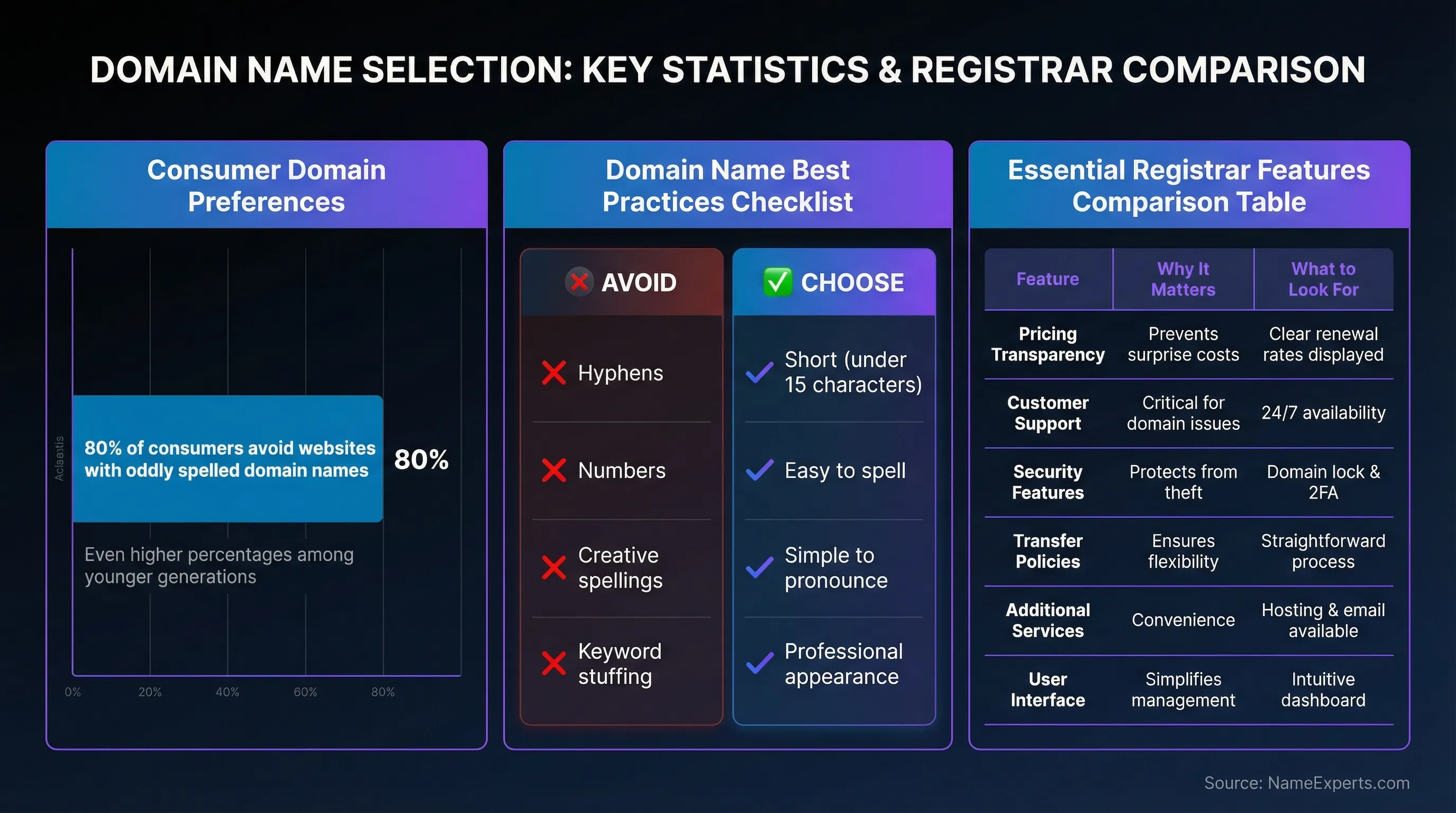
Selecting the right domain requires balancing multiple factors: brandability, memorability, clarity, and strategic alignment with your business goals. Start by brainstorming names that reflect your brand identity or clearly describe what you offer. The best domains are typically short (under 15 characters when possible), easy to spell, and simple to pronounce when spoken aloud.
Avoid common pitfalls that complicate domain names. Hyphens and numbers create confusion—people forget whether to include them or spell them out. Creative spellings may seem distinctive but often lead to lost traffic when visitors misspell your address. Industry research shows that roughly 80% of consumers avoid websites with oddly spelled domain names, with even higher percentages among younger generations. If your business name includes these elements, consider registering the standard spelling as well to capture misdirected traffic.
Keyword inclusion can support search visibility, but avoid over-optimization. A domain like "best-cheap-shoes-online.com" appears spammy and damages credibility. Instead, focus on a name that naturally incorporates relevant terms while maintaining professionalism. For example, "ComfortStride.com" suggests footwear without keyword stuffing.
Before committing to a name, conduct thorough trademark research. The trademark clearance process helps you avoid legal conflicts that could force costly rebranding. Search the USPTO database for U.S. trademarks, check international registrations through WIPO's Global Brand Database, and verify that similar names aren't already established in your industry. Even if a domain is technically available for registration, using it could infringe on existing trademark rights.
Geographic considerations also influence domain strategy. If you primarily serve Canadian customers, a .ca extension signals local presence and may improve search rankings for location-specific queries. International businesses often register both .com and country-specific versions to protect their brand across markets. Testing your domain ideas helps validate choices—say the name aloud to ensure it's easy to communicate, check social media availability to maintain consistent branding, and ask others if they can spell it correctly after hearing it once.
Is Your Perfect Domain Already Taken?
Finding out your ideal domain is registered doesn't mean you're out of options. Our stealth acquisition approach helps you secure premium domains without alerting sellers to inflate prices—protecting your anonymity while negotiating fair market value.
The Domain Registration Process Explained
Once you've identified your ideal name, the registration process is straightforward. Domain registrars—companies accredited by ICANN to sell domain names—provide search tools to verify availability. Simply enter your desired name, and the system checks whether it's already registered. If taken, most registrars suggest alternatives or show when the domain might become available.
When you find an available domain, you'll select a registration term, typically ranging from one to ten years. Longer terms provide stability and often include discounts, while annual registration offers flexibility. Be aware of pricing structures: many registrars advertise low promotional rates for the first year, then charge significantly higher renewal fees. Always check the renewal price before purchasing to understand the total cost of ownership.
Registration requires providing contact information that becomes part of the public WHOIS database, which lists domain ownership details. This transparency helps resolve disputes and enables communication between domain holders, but it also exposes personal information to spammers and solicitors. Privacy protection services replace your details with generic registrar information in public records—a worthwhile investment for most individuals and small businesses.
Essential security features should accompany every registration. Domain lock prevents unauthorized transfers to other registrars, protecting against hijacking attempts. Two-factor authentication adds an extra security layer to your registrar account. Auto-renewal ensures your domain doesn't accidentally expire, which could result in losing it to someone else. Most registrars include basic DNS management, email forwarding, and domain forwarding as standard features.
Some extensions have specific requirements. For example, .ca domains require Canadian presence—registrants must be Canadian citizens, permanent residents, or organizations with Canadian connections. Understanding these restrictions before attempting registration saves time and prevents complications.
Domain Registrar Comparison: What to Look For
Choosing the right registrar matters as much as selecting your domain name. While the underlying registration system is standardized through ICANN, registrars differ significantly in pricing, support, security offerings, and additional services. Evaluating these factors ensures you get reliable service that supports your long-term needs.
| Feature | Why It Matters | What to Look For |
|---|---|---|
| Pricing Transparency | Prevents surprise costs at renewal time | Clear display of both registration and renewal rates; no hidden ICANN fees or mandatory add-ons |
| Customer Support | Critical when issues arise with your domain | 24/7 availability via multiple channels; knowledgeable staff who understand domain technicalities |
| Security Features | Protects your domain from theft and unauthorized changes | Domain lock, two-factor authentication, DNSSEC support, and privacy protection included or available |
| Transfer Policies | Ensures you can move domains if needed | Straightforward transfer process; no excessive fees or artificial delays; clear authorization code access |
| Additional Services | Convenience of managing everything in one place | Hosting, email, SSL certificates, and website builders available if desired |
| User Interface | Simplifies domain management tasks | Intuitive dashboard for DNS management, renewals, and settings; mobile accessibility |
Pricing deserves special attention. Compare the total cost over multiple years rather than focusing solely on first-year promotions. Some registrars offer consistently fair pricing, while others use low introductory rates to attract customers before charging premium renewal fees. Transparent providers clearly display both prices upfront.
Customer support quality becomes apparent when problems occur. Look for registrars with strong reputations for responsive, knowledgeable assistance. Check review platforms and ask about average response times. The cheapest option often cuts corners on support, leaving you stranded during critical issues like DNS configuration problems or security incidents.
ICANN accreditation verifies that a registrar meets industry standards and follows established protocols. While accreditation doesn't guarantee quality, it provides baseline assurance that the company operates legitimately within the domain registration system.
Avoid Overpaying for Premium Domains
With 15+ years of experience and over 200 successful transactions, we bring market knowledge that prevents costly mistakes. Our no-bullshit approach to domain valuation ensures you understand what domains are actually worth—not just what sellers are asking.
When to Use a Domain Expert vs. Self-Registration
Most domain registrations are straightforward DIY transactions—you search for an available name, complete the purchase, and configure basic settings. This approach works well for personal projects, blogs, small businesses with simple needs, and situations where your desired domain is available at standard pricing. Modern registrar interfaces make self-service registration accessible even for technical beginners.
However, certain scenarios benefit significantly from professional domain expertise. Premium domain acquisition represents the most common situation requiring specialized help. When your ideal domain is already registered and owned by someone else, purchasing it involves negotiation, valuation assessment, and often stealth acquisition techniques to prevent price inflation. Domain brokers bring market knowledge that prevents overpayment and negotiation skills that improve acquisition success rates.
Competitive industries where domain names carry substantial strategic value also warrant professional guidance. If your business depends heavily on direct navigation traffic or if competitors might target similar names, expert consultation helps develop a comprehensive domain strategy. This includes identifying defensive registrations to protect your brand, evaluating trademark implications, and prioritizing acquisitions that deliver the strongest business impact.
Trademark-sensitive situations require careful navigation. If your desired domain relates to established brands, operates in highly regulated industries, or could face legal challenges, professional assessment helps avoid costly mistakes. Domain experts understand the intersection of trademark law and domain rights, providing guidance that protects your investment.
Building domain portfolios for brand protection involves strategic planning beyond simple registration. Companies often need multiple variations, geographic extensions, and defensive registrations to fully secure their brand online. Professional portfolio management ensures comprehensive coverage while optimizing costs and renewal schedules.
At NameExperts, we've facilitated over 200 domain transactions across 16+ years, developing deep expertise in premium domain acquisition and strategic naming. Our stealth acquisition methodology protects clients during competitive purchases, preventing sellers from inflating prices when they know a well-funded buyer is interested. We bring market knowledge that helps clients understand fair valuations and avoid overpaying for domains. Our naming methodology evaluates how well potential domains align with brand strategy, considering factors like memorability, trademark clearance, and long-term value. For businesses launching significant ventures or rebranding established companies, this expertise often delivers returns that far exceed the consultation cost.

The decision ultimately depends on your specific situation. If you're registering an available domain for a personal blog or side project, self-service registration makes perfect sense. If you're acquiring a premium domain for a business launch, navigating trademark complexities, or building a strategic domain portfolio, professional expertise typically provides significant value. Many businesses use a hybrid approach—handling routine registrations themselves while engaging experts for high-stakes acquisitions and strategic planning.
Your domain represents a long-term investment in your digital identity. Taking time to choose wisely, register securely, and protect strategically pays dividends as your online presence grows. Whether you handle registration yourself or work with domain professionals, understanding the fundamentals ensures you make informed decisions that support your goals. Start by searching for your ideal domain, evaluate your needs honestly, and choose the path that best positions you for success. For premium domain acquisitions or strategic naming consultation, contact NameExperts to discuss how our experience can help you secure the perfect domain for your business.
Work With a Domain Expert
Whether you're launching a startup, rebranding, or protecting your digital real estate, the right domain strategy makes all the difference. From stealth acquisitions of premium names to comprehensive trademark clearance and portfolio management, NameExperts brings boutique, personalized service that larger brokerages can't match. Get direct access to principal broker Joe Uddeme and discover how our transparent, expert guidance helps you secure the perfect domain at fair market value—without the
Get Started Free







Frequently Asked Questions
An online domain is your unique internet address (like example.com) that visitors use to find your website—it's the human-readable alternative to numerical IP addresses and serves as the foundation of your digital identity.
Standard domain registration typically costs $10-$20 annually for common extensions like .com, though promotional first-year rates may be lower and renewal prices often increase—premium or already-registered names can range from hundreds to millions of dollars depending on their value.
Use any registrar's domain search tool by entering your desired name—the system instantly checks availability across extensions and suggests alternatives if your first choice is already registered.
No, individuals can register domains without any business entity—however, registering under an LLC provides liability protection and appears more professional for business ventures.


